You typed "Chattermill vs Thematic" into a search bar because you are trying to pick a feedback analytics tool, and the first two results were written by Chattermill and Thematic. Each vendor frames the matchup so its own product wins. That is fine for them and useless for you. This is the neutral version: what each tool actually does, where they genuinely differ, what each one costs, and the buyer each was built for. If you run a growing ecommerce brand, there is also a third path that neither comparison page will mention, and it is at the end.
Both tools are real, capable, and aimed at the enterprise. Neither is a scam and neither is a toy. The Chattermill vs Thematic decision is mostly a decision about how you want to discover themes, how many channels you need to unify, and how much you are prepared to spend.
Chattermill vs Thematic at a glance
Every figure below is from each vendor's own public materials as of June 2026.
| Chattermill | Thematic | |
|---|---|---|
| Core approach | Hybrid AI: aspect-based sentiment, clustering, GenAI | Bottom-up unsupervised theme discovery |
| Channels | Surveys, tickets, reviews, social, calls, chat | Text-based sources (surveys, reviews, tickets) |
| Languages | 99+ native | 13 |
| Links themes to metrics | Yes (NPS, CSAT, CES) | Theme-level sentiment |
| Published price | None (custom, demo-gated) | Foundation from $25,000/yr |
| Volume guidance | Recommends ~5,000 feedback items/mo | Up to 25,000 comments, 3 datasets (Foundation) |
| Self-serve trial | No | No |
| Ecommerce-native | No | No |
Two rows deserve unpacking, because they are where the real choice lives: how each tool finds themes, and what each one costs.
How they find themes (the real difference)
This is the line that separates the two products, and it changes who is a good fit.
Thematic's signature is unsupervised theme discovery. You feed it raw feedback and it surfaces themes from the bottom up, without you defining categories first. The selling point is that you do not impose your assumptions on the data, so you catch the problem you did not know to look for. The tradeoff is that you spend real time at the start reviewing, naming, and refining the themes it proposes before the output is board-ready. Thematic markets this transparency and human control as the whole point of its theme taxonomy.
Chattermill takes a hybrid route. It combines aspect-based sentiment analysis, clustering, and generative AI, and ties the resulting themes to your CX metrics so a theme shows up next to the NPS or CSAT movement it explains. It is built to span more input types, including channels Thematic does not natively read, such as social posts and call transcripts. The pitch is breadth and a more automated path from raw feedback to an executive dashboard.
Neither approach is better in the abstract. If your priority is a transparent, auditable theme taxonomy you control, Thematic's bottom-up model fits. If your priority is unifying many channels and connecting themes to revenue and loyalty metrics with less manual setup, Chattermill's hybrid model fits.
What each one costs
Pricing is where most of these evaluations actually end, so here is the honest version of both.
Thematic publishes its entry price. The Foundation tier starts at $25,000 per year and covers up to 25,000 comments across 3 datasets, with an assigned customer success manager and support included. Above that, the Enterprise tier is custom-quoted. You still go through sales, but you can read the floor on the page before you ever book a call.
Chattermill does not publish a price. It is sales-led and demo-gated, with cost driven by your data volume and the number of integrations you need rather than a per-seat fee. Public benchmarks put typical contracts in the mid five figures and up, but the only way to get a real number is to talk to their team. Chattermill also gives volume guidance: it recommends roughly 5,000 feedback items a month and is candid that it is not built for teams below that line.
So the short version on money: Thematic from $25,000 a year published, Chattermill custom and demo-gated. Both are enterprise budgets. Neither has a self-serve trial you can start tonight to see whether it understands your data before you commit.
Who each tool is actually for
Choose Chattermill if you are an enterprise B2C team managing feedback across many channels at once, where surveys, support tickets, reviews, social, and call transcripts all need to roll into one view tied to your CX metrics, and you have the volume and budget to match. It is built for the global insights org, not the lean team.
Choose Thematic if you are a research or CX team that wants a transparent, controllable theme taxonomy and values seeing exactly how a theme was built, and a published $25,000 floor is inside your budget. It rewards teams who will invest the setup time to get a clean, auditable read on their feedback.
Both tools assume something most growing ecommerce brands do not have: thousands of feedback items a month, an enterprise budget, and a dedicated person to run the platform. If that is you, book both demos and pick on theme approach and channel coverage. If it is not, keep reading.
If you are SMB ecommerce, this fight is not yours
Here is the part neither vendor's comparison page will tell you. Most people searching "Chattermill vs Thematic" are not enterprise insights teams. They are operators at growing ecommerce brands with a few hundred reviews in an app like Judge.me, Yotpo, or RaveCapture and a steady trickle of support tickets in Gorgias, eDesk, or Zendesk. For that buyer, both of these tools are the wrong size: too much platform, an enterprise price tag, and a setup project you do not have time to run.
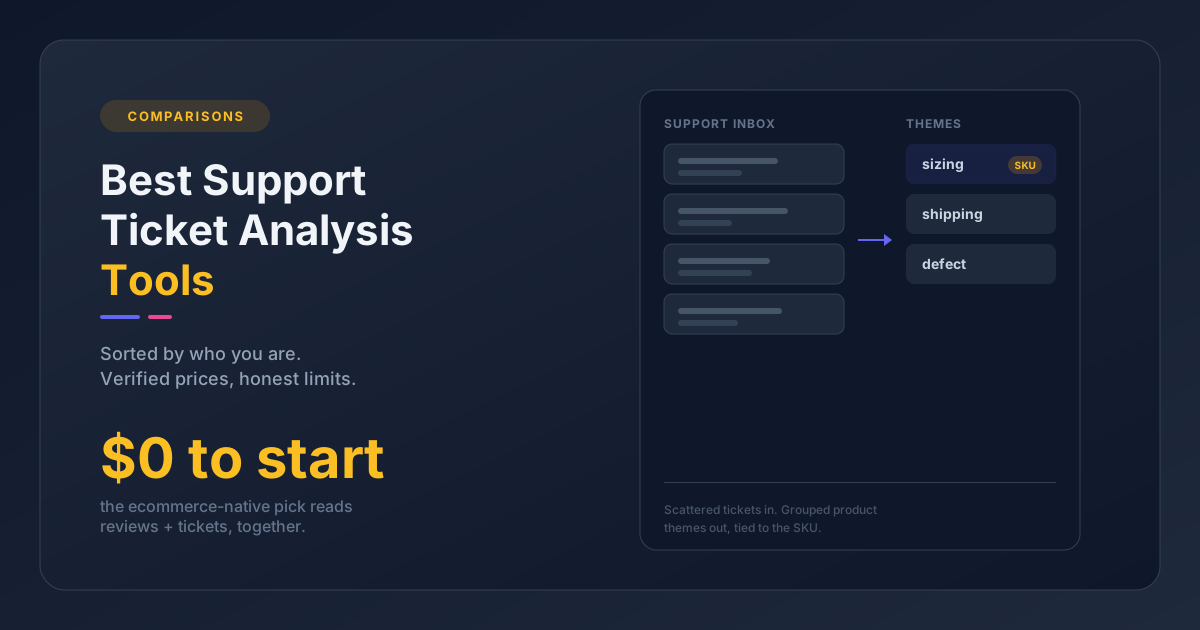
What that buyer actually needs is narrower and concrete. Read the reviews and the support tickets together, because they describe the same customer experience from two angles. Name the recurring problem. Tie it to the product it is about. Then say what to fix first this week. No demo, no procurement cycle, no dedicated analyst.
That is the gap Pattern Owl fills. It connects ecommerce review apps and helpdesks, runs theme extraction across both at once, ties themes to specific products, and points at the single issue worth fixing first instead of handing you another dashboard to interpret. It works across Shopify, BigCommerce, WooCommerce, and standalone stores, and it is free to start, self-serve, with no sales call. The reviews-and-tickets-together view is the piece neither Chattermill nor Thematic centers, and it is the one that matters most when your feedback lives in storefront apps and a helpdesk rather than a survey platform.
To be straight about the tradeoffs: Pattern Owl does not collect or display reviews, so you keep Judge.me or Yotpo for that and let Pattern Owl read what they gather. Its integration list is shorter than the enterprise incumbents. And it has no marketplace data yet, so Amazon and eBay reviews sit outside it. If you need omnichannel call-transcript analysis across 99 languages, you are back to Chattermill. For a DTC brand running its own store, those tradeoffs are usually the right ones.
A note on Thematic vs Dovetail
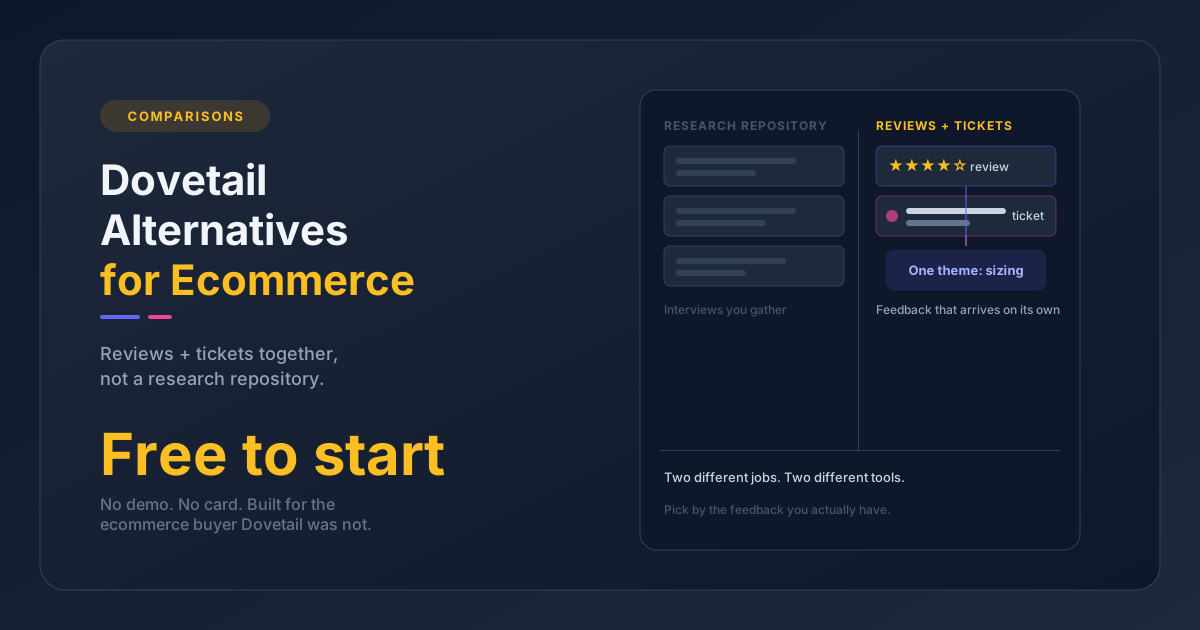
If you landed here weighing Thematic against Dovetail rather than Chattermill, the distinction is worth one line: Dovetail is a qualitative research repository for synthesizing interviews and usability tests, not a continuous feedback-analytics engine like Thematic or Chattermill. They solve different jobs. If that is the real comparison you are running, our Thematic alternatives breakdown covers where Dovetail fits and where it does not.
The takeaway
Between the two, Chattermill is the broader, omnichannel, demo-gated platform for enterprise B2C teams, and Thematic is the transparent, theme-controllable option with a published $25,000-a-year floor for research and CX teams. Pick on channel breadth versus theme transparency, and budget for an enterprise contract either way.
But if you are a growing ecommerce brand, the honest answer is that this is not your matchup. You do not need to win the Chattermill vs Thematic debate. You need your reviews and tickets read together, tied to your products, with a next action you can take this week, and you can start that today without talking to anyone. Compare the full field in our guide to the best customer feedback analysis software, or start a free Pattern Owl trial and see your first themes on your own data.
Frequently asked questions
What is the difference between Chattermill and Thematic?
Chattermill is a demo-gated, omnichannel feedback platform that uses hybrid AI to unify surveys, tickets, reviews, social, and calls and ties themes to CX metrics like NPS. Thematic uses bottom-up unsupervised theme discovery on text-based sources and publishes a Foundation tier from $25,000 per year. Chattermill is broader across channels; Thematic gives you more transparent control over the theme taxonomy.
Is Thematic cheaper than Chattermill?
Thematic publishes a starting price and Chattermill does not, so Thematic is easier to budget for, but both are enterprise-priced. Thematic's Foundation tier starts at $25,000 per year for up to 25,000 comments and 3 datasets. Chattermill is custom-quoted through sales with no public figure, and public benchmarks put typical contracts in the mid five figures and higher.
Which feedback analytics tool is best for a small ecommerce brand?
Neither Chattermill nor Thematic is built for a small ecommerce brand; both assume enterprise volume and budget. A growing ecommerce brand is usually better served by a self-serve tool that reads storefront reviews and support tickets together, such as Pattern Owl, which is free to start, connects review apps and helpdesks, and ties themes to specific products without a demo.
Do Chattermill and Thematic have a free trial?
No. Neither Chattermill nor Thematic offers a self-serve free trial. Both are sales-led: Chattermill is fully demo-gated, and Thematic publishes its Foundation price but still routes you through onboarding and sales. If you want to test a tool on your own data before committing, you need a self-serve option like Pattern Owl.
Does Chattermill or Thematic analyze ecommerce reviews and support tickets together?
Both can ingest reviews and tickets, but they are built for enterprise CX reporting rather than the ecommerce stack, and neither connects native ecommerce review apps like Judge.me or Yotpo. Pattern Owl connects those review apps and helpdesks like Gorgias and Zendesk directly and analyzes reviews and support tickets as one dataset for ecommerce brands.