You went to pull up MonkeyLearn and landed on a Medallia page. You are not imagining it. The MonkeyLearn you used to build text classifiers and run sentiment analysis is gone, and monkeylearn.com now redirects straight to medallia.com. If you had it wired into a workflow, that workflow is broken, and you are here to find out where to go next.
So this is not a "compare the features" situation. MonkeyLearn was discontinued, you need a replacement, and the first question is what you were actually using it for. The answer changes which MonkeyLearn alternative fits. This page sorts the real options by job, with the verified facts on what happened and an honest read on which one suits a growing ecommerce brand.
What happened to MonkeyLearn
MonkeyLearn was a no-code text-analysis platform. You could train a custom model on your own text, run sentiment analysis and keyword extraction, and call it through an API or a spreadsheet add-on. It got popular because you did not need a data-science team to use it.
Medallia acquired MonkeyLearn in February 2022. After the acquisition, the standalone product was wound down and folded into Medallia's experience platform. Today monkeylearn.com returns a permanent redirect to medallia.com, and third-party company databases list MonkeyLearn as closed. The technology lives on inside Medallia's text analytics, but you cannot sign up for MonkeyLearn on its own anymore.
Here is the whole thing in one block, since it is what most searchers actually want confirmed:
MonkeyLearn is no longer available as a standalone product. Medallia acquired it in February 2022 and discontinued the independent platform; the old monkeylearn.com domain now redirects to medallia.com. Former users need a replacement, and the right one depends on whether you want a build-it-yourself text API or a done-for-you analysis tool.
How to choose a MonkeyLearn replacement
MonkeyLearn sat in an awkward middle: more than a raw NLP API, less than a full customer-feedback platform. People used it two different ways, and that split is the fastest way to pick.
- You want the API and the model-builder back. You were classifying arbitrary text, training your own categories, and calling it from your own code or spreadsheets. You want the API and model-trainer back, not a feedback tool. Look at MeaningCloud or Nyckel.
- You were analyzing customer feedback all along. The "text" was really reviews, support tickets, and survey responses, and the model-building was a means to an end. Training models was never the point. You just want something that reads your feedback and surfaces what is breaking. Look at Pattern Owl if you run ecommerce, or SentiSum and Medallia for larger support and enterprise teams.
That second group is where most former MonkeyLearn users actually land. The model-builder was never the goal; understanding customers was. If that is you, a no-build tool that already speaks your data is an upgrade.
The MonkeyLearn alternatives, by job to be done
Pattern Owl: the no-build, ecommerce-native pick
I run Pattern Owl, so weigh that, but the framing is easy to check. It is built for the former MonkeyLearn user who was really after feedback analysis, not model training, and who runs an ecommerce brand.
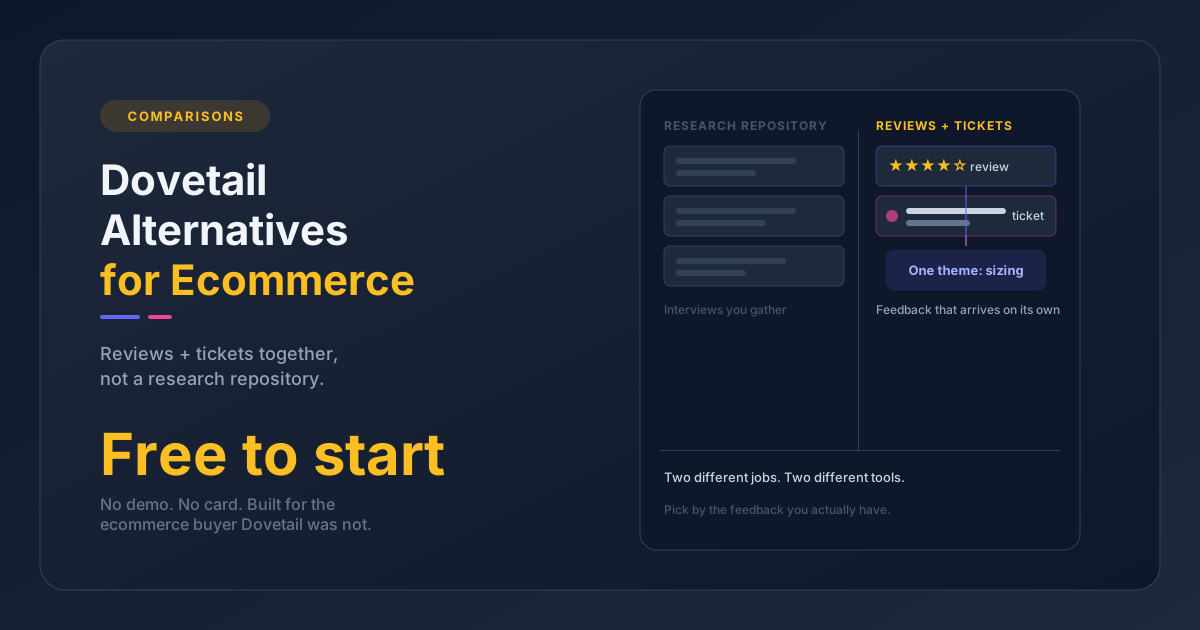
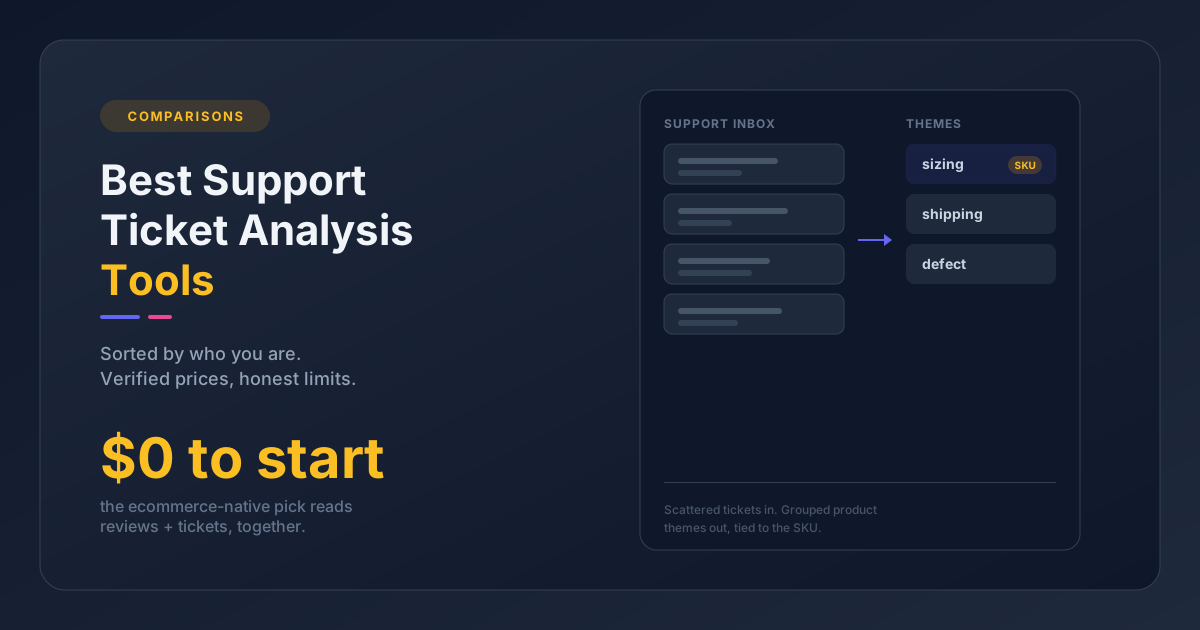
Here is the core difference from MonkeyLearn. MonkeyLearn handed you tools to build a classifier. Pattern Owl skips the build entirely: you connect your sources and it reads them. It pulls from review apps like Judge.me, Yotpo, and RaveCapture, and from helpdesks like Gorgias, eDesk, and Zendesk, then runs theme extraction across all of them at once. Each theme is tied to the product it is about, so you can see which SKU a complaint clusters around. Then it points you at the one thing to fix first, instead of handing you another dashboard to read. Shopify, BigCommerce, WooCommerce, or a standalone store all work.
The wedge no other tool here fills: Pattern Owl reads your reviews and your support tickets together, as one dataset. MonkeyLearn could process either if you fed it the text and built the model. Pattern Owl connects both sources for you and analyzes them side by side, which is where the useful patterns live. It is free to start and self-serve, with no demo to sit through. Connect one review app or helpdesk at patternowl.com/auth/signup and see your first themes, tied to products, today.
What it is honest about: Pattern Owl does not collect or display reviews, so you keep Judge.me or Yotpo for that. Its integration list is growing but smaller than the enterprise incumbents. And it has no Amazon or eBay marketplace data yet. It is also not a general-purpose text API. If you need to classify arbitrary non-feedback text, one of the API options below is the better call.
MeaningCloud: the closest like-for-like API
If what you miss is the text-analysis API itself, MeaningCloud is the nearest match. It does sentiment analysis, text classification, topic extraction, and entity recognition through an API and a spreadsheet add-on, much the way MonkeyLearn did. It supports multiple languages and deep linguistic analysis.
It has a free tier covering up to 40,000 API calls a month, with paid plans starting around $99 a month as of June 2026. For a developer who wants to rebuild a MonkeyLearn-style pipeline with a real free tier to test on, this is the most direct swap on the list. It is a building block, though, not a finished feedback tool: you still wire it into your own workflow.
Nyckel: no-code custom classifiers
Nyckel is the pick if the part of MonkeyLearn you loved was training your own classifier without writing model code. It focuses on quick custom text (and image) classification: you label some examples, it trains a model, you call it via API. The setup is fast and properly no-code.
Like MeaningCloud, it gives you a model and an endpoint, not an analysis layer. You still decide what to feed it and what to do with the output. Good fit for a specific classification task you control; not the answer if you want feedback read and prioritized for you.
SentiSum: support-heavy CX teams
SentiSum reads support tickets and public review sites such as Trustpilot, G2, and app stores, working through helpdesks like Zendesk, Intercom, and Freshdesk. If your center of gravity is the support queue and you have the budget for it, the coverage is strong.
Two things to know for ecommerce. Pricing starts around $3,000 a month as of June 2026, which is enterprise-leaning rather than SMB. And it does not connect ecommerce review apps like Judge.me or Yotpo, so your storefront review data sits outside it. Right for a support-led team with budget; a poor fit if your reviews live in Shopify apps.
Medallia: where MonkeyLearn actually went
Medallia is the literal home of MonkeyLearn's technology now. It is a Fortune-500-scale experience-management platform, and MonkeyLearn's text analytics were absorbed into it. If you were an enterprise buyer who needed that engine inside a wider experience suite, following it into Medallia is a defensible move.
For everyone else it is the wrong size. Medallia is custom-priced and sales-led, built for large organizations with a dedicated insights function. An ecommerce brand with a few hundred reviews a month would pay for a platform it barely touches. Medallia answers "where did the tech go," rarely "what should I buy."
Quick comparison
| Tool | Best for | No build required? | Reads reviews + tickets together? | Ecommerce-native? | Starting price |
|---|---|---|---|---|---|
| Pattern Owl | SMB / growing ecommerce | Yes | Yes | Yes | Free to start |
| MeaningCloud | Developers wanting the API back | No (you wire it up) | No | No | Free tier; from ~$99/mo |
| Nyckel | No-code custom classifiers | Partial (you train it) | No | No | Usage-based |
| SentiSum | Support-heavy CX teams | Yes | Tickets + review sites | No | ~$3,000/mo |
| Medallia | Enterprise experience management | Yes | Yes | No | Custom |
| MonkeyLearn (baseline) | Discontinued | No (model-builder) | No | No | No longer available |
A couple of adjacent tools worth naming
A MonkeyLearn searcher sometimes lands on these, so here is what they actually do. Kimola scrapes public reviews from Amazon, Trustpilot, Yelp, Etsy, and Google for competitive and category research; its Standard plan is $179 a month as of June 2026. It is a research-and-scraping tool, not connected analysis of your own customers' reviews and tickets. Lexalytics (now part of InMoment) is an enterprise NLP engine sold on usage-based and custom pricing, aimed at large teams that want deep linguistic control. Both solve narrower or larger problems than the everyday "I lost MonkeyLearn and need my feedback read" one.
The bottom line
MonkeyLearn is gone, and which replacement fits comes down to what you were really doing with it. If you need a text-analysis API or a no-code classifier you control, MeaningCloud and Nyckel are the honest like-for-like swaps. If you are an enterprise team, SentiSum or Medallia carry the scope.
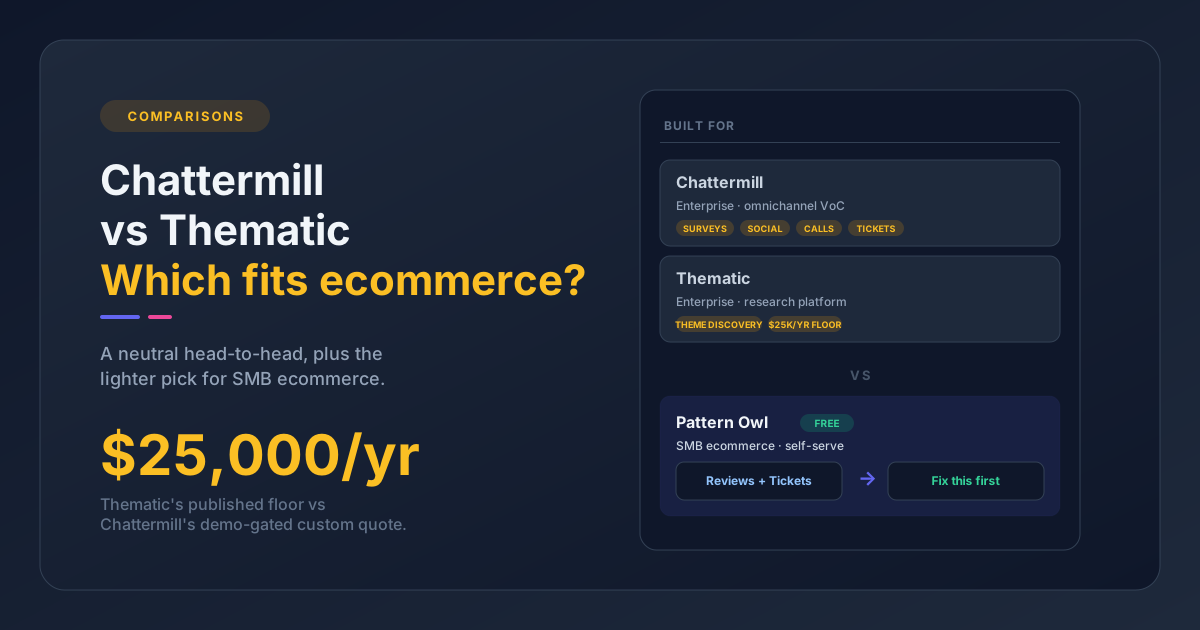
But most people who used MonkeyLearn were not in it for the model-building. They wanted to know what customers were saying and what to fix. If that is you and you run an ecommerce brand, you want a tool that reads your reviews and tickets as one dataset and ties what it finds back to specific products. Pattern Owl does that, and it starts free without a sales call. To see the wider field, the best customer feedback analysis software guide compares the category, and the Thematic alternatives breakdown covers the enterprise-research end. Or skip the comparison and connect your first review app or helpdesk, free, and see what your customers have been telling you.
FAQ
Is MonkeyLearn still available?
No. MonkeyLearn was discontinued as a standalone product. Medallia acquired it in February 2022 and folded its text analytics into the Medallia platform. The old monkeylearn.com domain now redirects to medallia.com, and you can no longer sign up for MonkeyLearn on its own.
What happened to MonkeyLearn and what replaced it?
Medallia acquired MonkeyLearn in February 2022 and wound down the independent product. The technology now lives inside Medallia's experience platform. There is no direct one-to-one replacement: former users pick based on need, choosing a text-analysis API like MeaningCloud, a no-code classifier like Nyckel, or a done-for-you feedback tool like Pattern Owl.
What is the best MonkeyLearn alternative for ecommerce?
Pattern Owl, for a growing ecommerce brand. It skips MonkeyLearn's model-building step, connects your review apps and helpdesks, and reads reviews and support tickets together, tying themes to specific products. It is free to start and self-serve, with no demo required.
Which MonkeyLearn alternatives analyze reviews and support tickets together?
Pattern Owl connects ecommerce review apps (Judge.me, Yotpo, RaveCapture) and helpdesks (Gorgias, eDesk, Zendesk) and analyzes them as one dataset. SentiSum reads support tickets and public review sites like Trustpilot, but it does not connect ecommerce review apps, so storefront review data stays outside it.
Is there a no-code MonkeyLearn alternative?
Yes. Nyckel lets you train custom text classifiers without code, the closest match to MonkeyLearn's model-builder. For feedback specifically, Pattern Owl is no-code and no-build: you connect sources and it reads them, with no model to train at all.