You booked a Chattermill demo, then read the fine print. It recommends a minimum of around 5,000 feedback items a month and tells you outright that it is not a fit below that. Pricing is custom and runs through sales, the platform is built for global CX teams unifying surveys, calls, and social, and the whole thing assumes a dedicated insights function you do not have.
If you run a growing ecommerce brand with a few hundred reviews in Judge.me or Yotpo and a steady trickle of Gorgias tickets, you do not need an enterprise VoC suite, a procurement cycle, and a quarterly onboarding. You need something that reads your reviews and tickets together, names the recurring problem, and tells you what to fix first this week, without a sales call. This guide lays out the best Chattermill alternatives by what you actually need, starting with the self-serve, ecommerce-native option you can try today, free.
Why teams leave Chattermill (or never start)
Three honest reasons come up again and again, and none of them are about Chattermill being a bad product.
First, the volume floor. Most growing ecommerce brands sit well under it. A few hundred reviews and a few dozen tickets a week disqualifies you before you start.
Second, the buying motion. Chattermill is sales-led and demo-gated, with no public dollar figure and no self-serve trial. For a small team that just wants to see whether a tool understands its data, that is a lot of friction before you know if it even works for you.
Third, scope. Chattermill is built to unify surveys, reviews, tickets, social, and call transcripts for enterprise CX organizations. Its public clients include Uber, H&M, and HelloFresh. That is more platform than a five-person ecommerce team needs, and the breadth comes with operational weight to match.
To be fair: for a high-volume global CX team with a dedicated insights org, Chattermill is a serious AI-native voice-of-customer tool. The problem most readers of this page have is fit, not quality. The right-sized alternative looks different. It is ecommerce-native, self-serve, reads reviews and tickets together, and has a price you can read on a page.
What to look for in a Chattermill alternative
If you are sizing down rather than scaling up, here is the lens worth using. It doubles as a rough scorecard.
- Reads reviews and support tickets together. Your storefront reviews and your helpdesk describe the same customer experience. A tool that only reads one source shows you half the picture. This is the core of any real voice of customer program.
- Connects the tools you already use. Review apps and helpdesks, not enterprise survey, social, and call-transcript stacks. The integration list should match an ecommerce reality, not a Fortune 500 one.
- Carries ecommerce and product-level context. You want themes tied to specific products, not generic CX categories that ignore which SKU is generating the complaints.
- Self-serve with transparent pricing. A published number and a trial you can start yourself beat a demo-gated custom quote when you are trying to move this week.
- Points you to a next action. A dashboard shows you what happened. You want a tool that points at the one issue to fix this week and why.
Pattern Owl - best for SMB and growing ecommerce brands
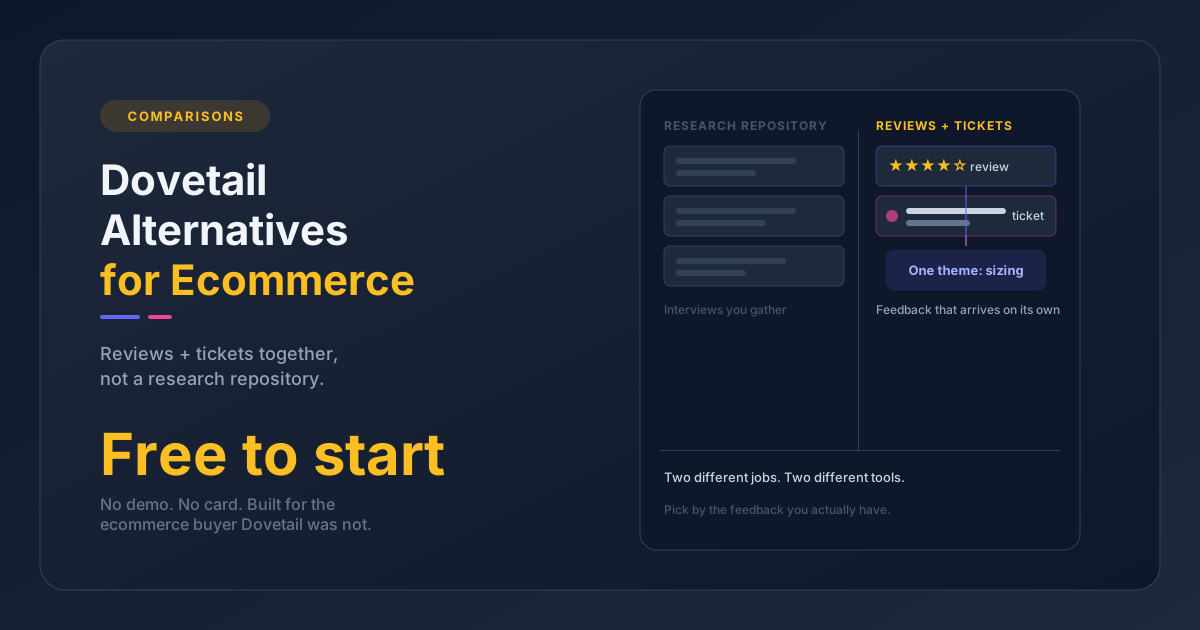
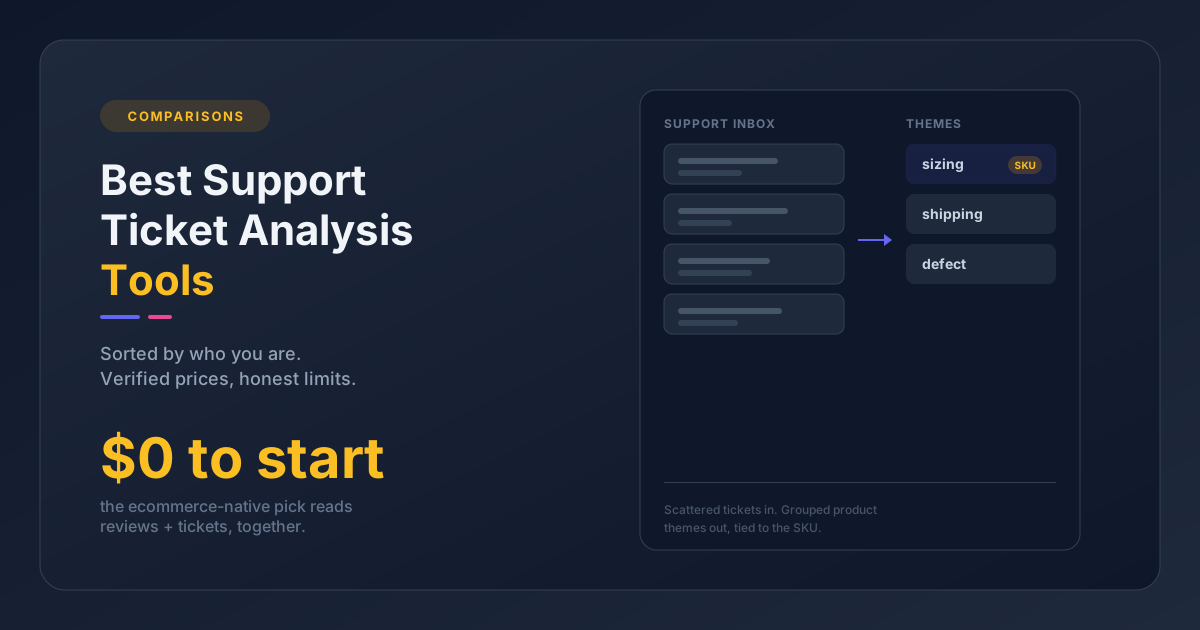
Pattern Owl is built for the brand Chattermill says it is not for. It reads your product reviews and your support tickets in the same place, connecting review apps like Judge.me, Yotpo, and RaveCapture alongside helpdesks like Gorgias, eDesk, and Zendesk. It pulls themes from all of those sources and ties them to the product they are about. Then it tells you the one thing to fix first, instead of handing you another chart to read. It works for Shopify, BigCommerce, WooCommerce, and standalone stores.
It is free to start - a self-serve trial at patternowl.com/auth/signup, with no demo, no sales call, and no procurement.
Put directly against Chattermill: where Chattermill needs around 5,000 feedback items a month and a sales conversation, Pattern Owl is built for the brand with a few hundred reviews and a handful of tickets a week, and you can be running today. If your whole question is "what are customers complaining about across my reviews and tickets, and which product should I look at first," this is the tool that answers it. Use it to find patterns in customer reviews and turn support tickets into product improvements.
Where Pattern Owl is honestly not the answer
A few things to be clear about, because the fit cuts both ways. Pattern Owl does not collect or display reviews. You keep Judge.me or Yotpo for that, and Pattern Owl reads the reviews they gather. Its integration list is growing but is smaller than the enterprise incumbents. And it has no marketplace data yet, so Amazon and eBay reviews sit outside it. If any of those is a dealbreaker, one of the picks below will fit you better.
Thematic - best for enterprise research and theme discovery
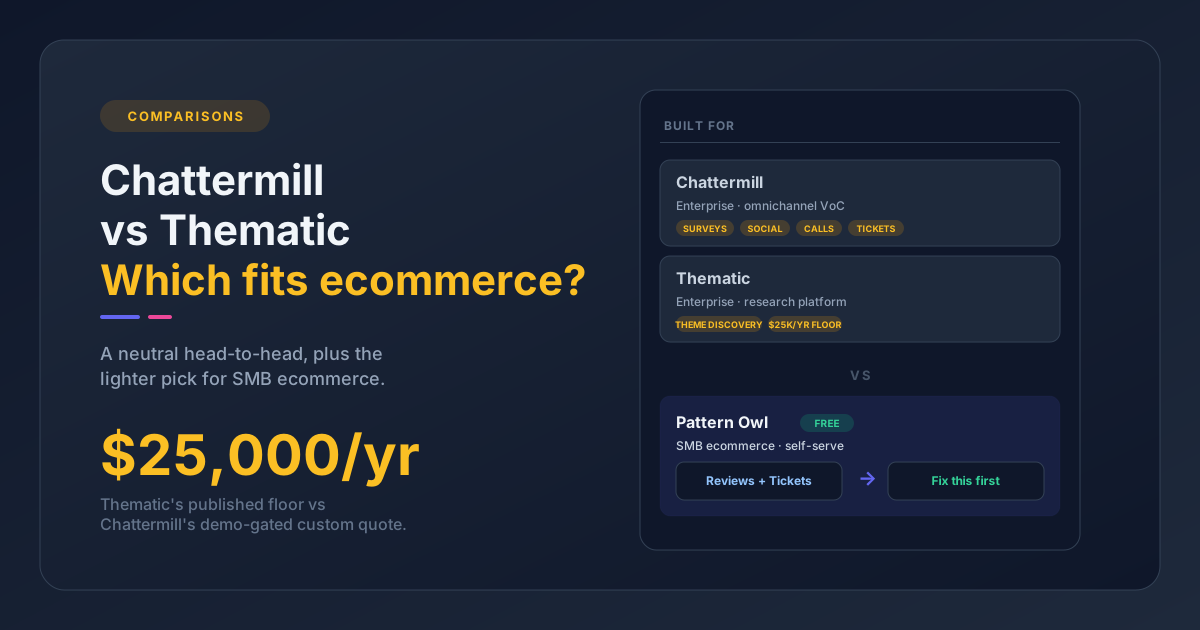
If you genuinely need enterprise analysis depth, Thematic is the closest like-for-like. Its differentiator is unsupervised theme discovery, meaning it surfaces themes without you defining categories first, layered across survey, review, and ticket data and quantified for executive reporting. It is not ecommerce-specific.
The published Foundation tier starts at $25,000 a year, covering up to 25,000 comments and three datasets, with Enterprise pricing custom above that. It answers the "I want the analysis horsepower but I want a number I can actually see" itch, while still sitting firmly in an enterprise budget. If Thematic is the tool you are actually weighing, we go deeper in our Thematic alternatives breakdown.
Medallia and Qualtrics - best for enterprise experience management
These are where you go if Chattermill felt too small, not too big. Both are full experience-management platforms spanning customer, employee, product, and brand, and both are named 2026 Gartner Magic Quadrant Leaders for voice of customer. Pricing is custom and enterprise; third-party benchmarks for platforms at this tier run well into six figures.
The honest framing: if you have a dedicated insights org and a procurement process, these are the real incumbents. If you are an ecommerce team of a handful of people, this is the opposite direction from where you want to go. One note worth flagging, Medallia has had a notable leadership and ownership change recently, so factor that into a long evaluation. MonkeyLearn, which some older lists still mention, folded into Medallia after the 2022 acquisition and is no longer a live standalone option.
SentiSum - best for support-heavy CX teams
SentiSum is the pick when your center of gravity is support, not the storefront. It reads support tickets and public review sites such as Trustpilot, G2, and app stores, working through helpdesks like Zendesk, Intercom, and Freshdesk. Pricing starts around $3,000 a month, which is real enterprise CX budget rather than SMB.
The gap to know for ecommerce: SentiSum does not connect ecommerce review apps like Judge.me or Yotpo, so your storefront review data sits outside its scope. The simple split is this. Choose SentiSum if the helpdesk is your world and your budget is enterprise. Choose Pattern Owl if you want storefront reviews and tickets analyzed together at an SMB price.
Kimola - best for competitive review research
Kimola is doing a different job, and it is here because people conflate it with feedback analysis. It scrapes public reviews from Amazon, Trustpilot, Yelp, Etsy, and Google for competitive and category research. That is about reading the market and your competitors, not analyzing connected review and ticket data from your own customers.
Its Standard tier is $179 a month, with a free Starter and a $49 Basic tier below, and a $359 Business tier above. So it is affordable, but it is solving a research question, not a customer-feedback-operations one. Use Kimola to study competitors, and a connected-data tool to analyze your own customers.
Quick comparison at a glance
| Tool | Best for | Self-serve? | Starting price / floor | Reads reviews + tickets together? | Ecommerce-native? |
|---|---|---|---|---|---|
| Chattermill | Enterprise global CX | No (demo-gated) | Custom; ~5,000 items/mo floor | Yes | No |
| Pattern Owl | SMB ecommerce | Yes | Free to start | Yes | Yes |
| Thematic | Enterprise research | No | $25,000/yr | Yes | No |
| Medallia / Qualtrics | Enterprise XM | No | Custom enterprise | N/A, XM platform | No |
| SentiSum | Support-heavy CX | No | ~$3,000/mo | Tickets + public review sites | No |
| Kimola | Competitive research | Yes | $179/mo | No (public reviews only) | No |
How to choose
If you are an ecommerce brand under Chattermill's volume floor and want to start today, go with Pattern Owl. If you need enterprise theme-discovery depth or a full experience-management platform, look at Thematic, Medallia, or Qualtrics. If support tickets are your center of gravity and your budget is enterprise, SentiSum fits. If you are researching competitors rather than your own data, that is Kimola.
Frequently asked questions
What is the best Chattermill alternative for a small ecommerce brand?
Pattern Owl. It is self-serve, free to start, and reads your reviews and support tickets together rather than forcing you into an enterprise platform you will not use the rest of.
Why is Chattermill not a fit for small teams?
Chattermill recommends a minimum of around 5,000 feedback items a month and states that it is not a fit below that. It is also sales-led and demo-gated with custom pricing, which adds friction for a small team that just wants to see results.
Is there a Chattermill alternative with public pricing I can try without a demo?
Pattern Owl is free to start with a self-serve trial, no demo required. Thematic and Kimola publish starting figures, but they are not self-serve in the same way.
Can a Chattermill alternative analyze reviews and support tickets together?
Yes. Pattern Owl connects review apps and helpdesks and extracts themes across both. SentiSum reads tickets and public review sites, but it does not connect ecommerce review apps like Judge.me or Yotpo. Here is more on how to analyze reviews and support tickets together.
Do I still need a review collection tool?
Yes, if you use Pattern Owl. It analyzes feedback but does not collect or display reviews, so you keep Judge.me or Yotpo for collection and let Pattern Owl read what they gather.
What about Amazon or eBay review data?
Pattern Owl has no marketplace data yet, so Amazon and eBay reviews are outside its scope. Kimola scrapes public marketplace reviews if competitive research is what you are after.
If you want to see what the right-sized version looks like, you can compare the field in our roundup of the best customer feedback analysis software, or start a free Pattern Owl trial, connect your reviews and tickets, and see your first themes today.