You've read your own reviews. You've tagged themes, tracked sentiment, maybe even built a system for it. But there's an entire dataset most ecommerce brands ignore completely: the reviews their competitors' customers leave. Learning to mine competitor reviews for product gaps is one of the highest-ROI research activities in ecommerce - and it costs nothing but time.
Those reviews are unfiltered market research. When someone writes three paragraphs about why a competing product disappointed them, they're handing you a product brief. When dozens of customers complain about the same missing feature, they're telling you exactly what gap to fill. And unlike surveys or focus groups, nobody's performing for an audience. Review text is what people actually think, written in the moment they feel it.
Research from Northwestern's Kellogg School found that mining online reviews can replace traditional focus groups for product development insights - and the data is free, always available, and constantly refreshed. The catch is that most ecommerce brands never look beyond their own reviews. Here's how to change that.
Why Competitor Reviews Are the Best Free Market Research
Traditional competitive analysis looks at pricing, features, and marketing. That's useful but incomplete. It tells you what competitors offer - not how customers actually experience it.
Reviews fill that gap. A competitor might advertise "premium materials" on their product page, but if 40 reviews mention the fabric pills after two washes, you know the reality. Their feature list says "easy assembly," but their 2-star reviews say customers spent three hours with missing screws.
This kind of competitive intelligence from customer reviews is more reliable than pricing comparisons or feature matrices because it reflects actual buyer experience, not marketing claims. And unlike competitor website copy (which is optimized to look good), reviews are optimized for nothing. They're raw.
The strategic value breaks down into three categories:
- Problems your product already solves - These are messaging opportunities. If competitors get complaints about something you handle well, you can address it directly in your product pages and ads.
- Problems nobody in the category solves - These are product opportunities. Recurring complaints across multiple competitors point to category-wide gaps.
- Things competitors do well - Don't skip positive reviews. They reveal table-stakes expectations you need to match before you can differentiate.
Where to Find Competitor Reviews Worth Mining
Not all review sources are equal. Here's where to look and what each source reveals:
| Source | What It Reveals | Best For |
|---|---|---|
| Amazon/Walmart/Etsy | High-volume, detailed complaints with verified purchase badges | Product quality, sizing, shipping, value perception |
| Judge.me/Yotpo/Stamped (on competitor sites) | Brand-specific feedback, often more about the buying experience | Customer service, packaging, product-site accuracy |
| Google Reviews | Location and brand-level sentiment | Fulfillment, returns, overall brand experience |
| Trustpilot/Sitejabber | Post-purchase frustration, support failures | Service gaps, return policies, delivery issues |
| Reddit/Facebook groups | Unfiltered, long-form discussions with community context | Category-wide pain points, brand comparisons, feature wishlists |
Marketplace Reviews
Amazon is the richest source for most ecommerce categories. The review volume is high, the detail level is often excellent, and the filtering tools are built in. Start with 1-3 star reviews and sort by most recent. Skip the one-liners ("didn't work") and focus on reviews where someone wrote three or more sentences explaining what went wrong.
Walmart and Etsy reviews are thinner in volume but can reveal different customer segments. Walmart shoppers often have different price sensitivity than Amazon buyers, which means different complaints.
Brand Site Reviews
If your competitors use Judge.me, Yotpo, Stamped, or another review platform, their product pages often display full review text. These reviews tend to be more about the product-to-expectation gap: "It looked different in the photos," "Description said cotton but it feels synthetic," "Runs two sizes small."
This is gold for your product pages. When you know what expectations competitors are setting and failing to meet, you can set accurate expectations and win on trust.
Community Channels
Reddit threads and Facebook groups surface complaints that people don't bother putting in a formal review. Someone in r/buyitforlife saying "I went through three of [competitor's product] in a year" carries weight - and it usually triggers a thread of others sharing similar experiences. These discussions reveal category-wide frustrations that no single brand's reviews would show you.
The 4-Step Workflow to Mine Competitor Reviews for Product Gaps
Step 1: Collect and Filter
Pick 2-3 direct competitors. For each, collect reviews from their primary channels (usually their own site + Amazon). Focus on:
- 1-3 star reviews - This is where the gaps live. 4-5 star reviews are useful later, but start with complaints.
- Detailed reviews (3+ sentences) - Short reviews rarely tell you anything useful. "Bad quality" tells you nothing. "The stitching came apart at the seams after one wash cycle, and the zipper broke within a month" tells you exactly what failed.
- Recent reviews (last 6-12 months) - Older reviews may reflect problems that have been fixed. You want current pain points.
You don't need thousands. For most ecommerce categories, 50-100 detailed negative reviews per competitor is enough to see clear patterns.
Step 2: Categorize Complaints Into Themes
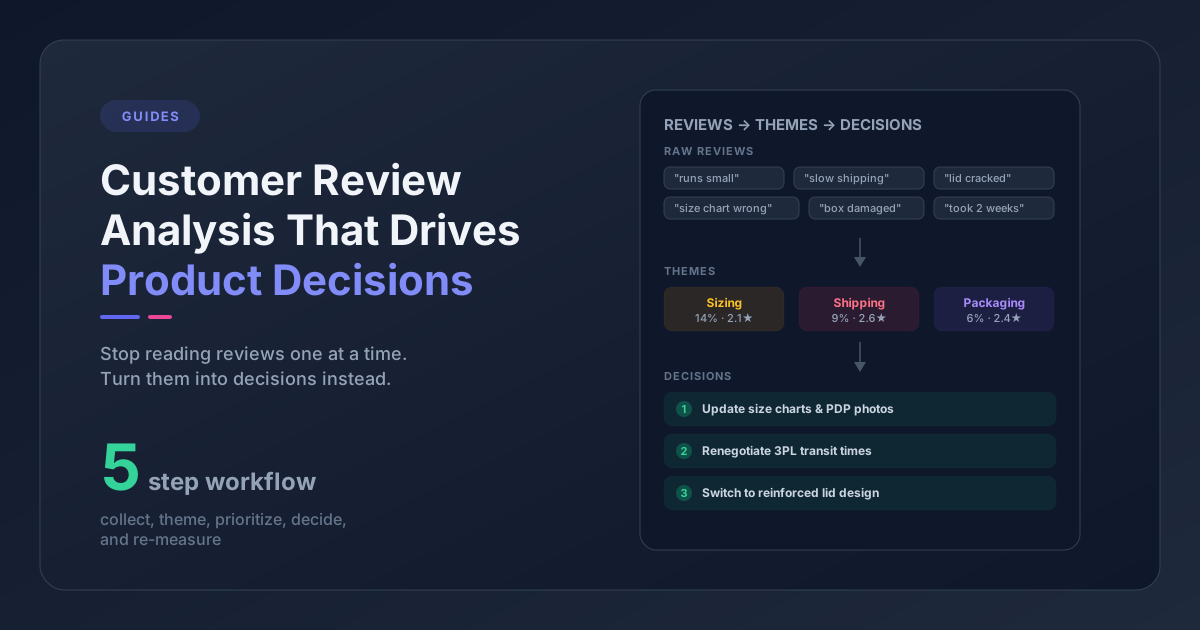
Read through your collected reviews and sort each complaint into a theme. Don't overthink the taxonomy - start simple and refine as you go. Common ecommerce complaint themes:
- Product quality - Materials, durability, construction, finishing
- Sizing/fit - Runs large, runs small, inconsistent between products
- Product accuracy - Doesn't match photos, description was misleading, color is off
- Missing features - "I wish it had..." or "Would be perfect if..."
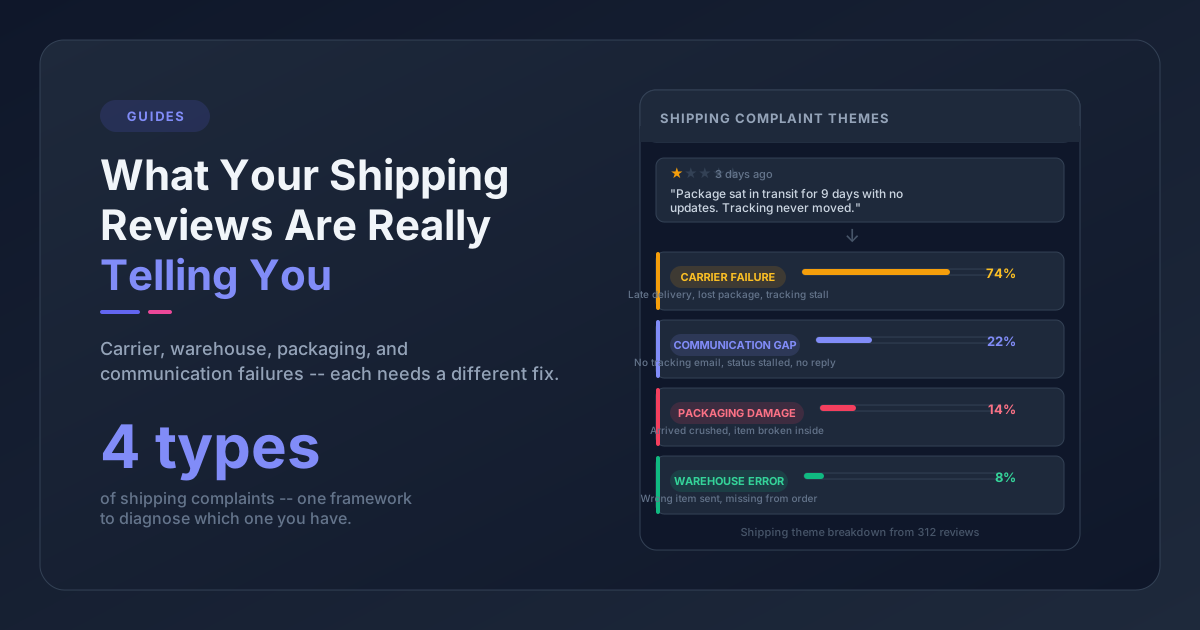
- Packaging/presentation - Damaged in transit, cheap packaging, no instructions
- Value perception - "Not worth the price," "Expected more for $X"
- Customer service - Slow responses, difficult returns, unhelpful support
Track the count for each theme. Five complaints about sizing are noise. Fifty complaints about sizing are a signal.
If you're already categorizing your own customer feedback, use the same taxonomy for competitor reviews. This makes the comparison direct: "Competitors get 30% of complaints about sizing. We get 5%. That's a strength we should market harder."
Step 3: Find the Product Gaps
Now look for patterns across your complaint themes. You're searching for four types of gaps:
Unresolved recurring complaints. If the same complaint appears across multiple competitors and none of them seem to be fixing it, that's a category-wide gap. These are your biggest opportunities - they're problems customers have accepted as normal, which means whoever solves them first gets an outsized advantage.
Feature requests competitors ignore. "I wish this came in a travel size." "Would love a version without fragrance." "Why doesn't anyone make this in dark colors?" When you see the same request across different competitors' reviews, customers are telling the market what to build. Most brands don't listen because these requests live in review text, not in feature request forms.
Problems your product already solves. This is the fastest win. If competitors get hammered for slow shipping and you ship in two days, that's not a product change - it's a messaging change. Update your product pages, your ad copy, and your comparison content to speak directly to that frustration.
Things competitors do well that you don't. Don't cherry-pick only negatives. If a competitor consistently gets praised for their packaging and your packaging is an afterthought, that's a gap in your direction. Finding patterns in reviews means looking at the full picture, not just the parts that make you feel good.
Step 4: Map Gaps to Your Roadmap
Not every gap is worth pursuing. Prioritize by crossing two dimensions: how frequently the complaint appears and how much business impact fixing it would have.
| High Frequency | Low Frequency | |
|---|---|---|
| High Impact | Priority 1: Fix now | Priority 2: Monitor |
| Low Impact | Priority 3: Batch with related changes | Ignore for now |
Sort your findings into three action buckets:
- Quick wins (days): Messaging and content changes. Update product descriptions, FAQ sections, and ad copy to address competitor pain points your product already solves. Mine your own feedback for product page copy and layer in what you've learned from competitor complaints.
- Product improvements (weeks-months): Sizing adjustments, material upgrades, new variants, packaging redesigns. These require investment but address proven demand.
- New product opportunities (months-quarters): Category-wide gaps that no one solves. These are bigger bets but backed by real evidence from hundreds of frustrated customers.
What to Do With What You Find
The review mining workflow produces three types of output that should feed into different parts of your business:
Product pages and marketing. Take the exact language competitors' customers use in complaints and address it in your copy. If they say "falls apart after a month," your product page should say something like "double-stitched seams, built to last." You're not guessing at objections - you're answering ones that real buyers in your category already have.
Product development. The feature requests and quality complaints from competitor reviews are a prioritized backlog disguised as review text. Share them with your product team - this is more reliable than internal brainstorming because it comes from people who spent money and were disappointed.
Content and SEO. Competitor pain points make excellent blog and comparison content. "Why [product type] keeps breaking" or "[product category] sizing guide" - these topics have built-in search demand because frustrated customers are actively looking for answers.
If you're doing this manually, a spreadsheet works fine at small scale. Once you're tracking multiple competitors across multiple products, a tool like Pattern Owl can automate the theme extraction so you're not tagging hundreds of reviews by hand.
Common Mistakes in Ecommerce Competitor Review Analysis
Cherry-picking individual reviews. One angry customer isn't a pattern. Look for themes that appear across dozens of reviews and multiple competitors. Individual reviews are anecdotes. Aggregated themes are intelligence.
Only reading negative reviews. Positive competitor reviews reveal table-stakes expectations. If every 5-star review praises fast shipping, that's the baseline. Failing to meet it means you lose before the product conversation even starts.
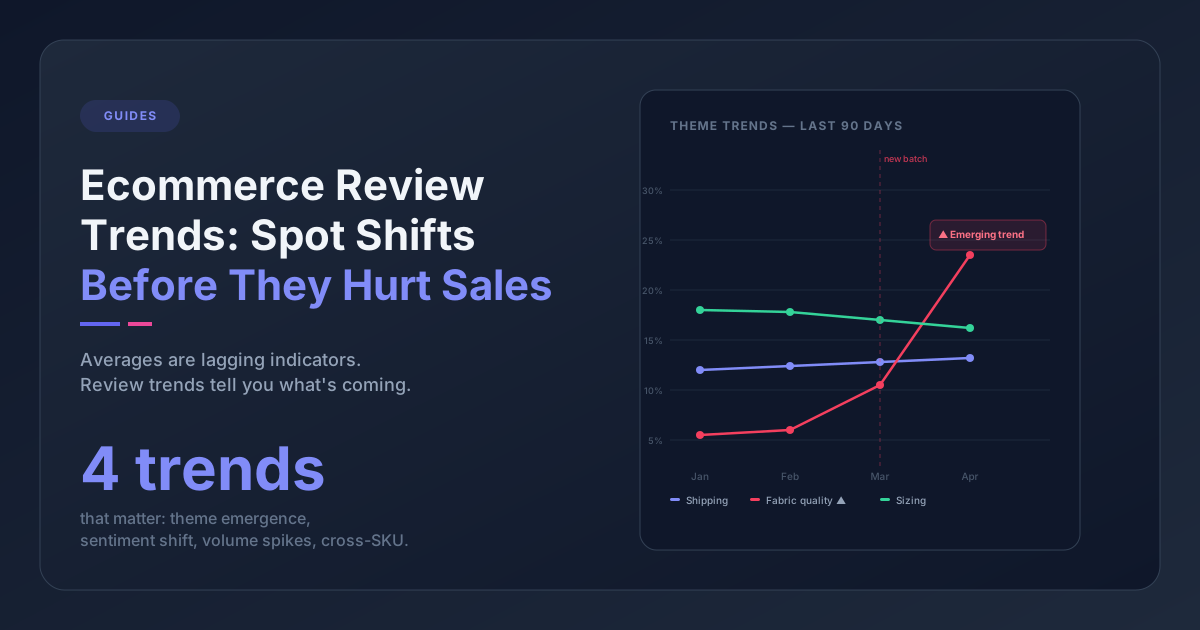
Treating it as a one-time project. Competitor weaknesses shift as they update products and processes. A complaint that dominated reviews six months ago might be fixed. A new pain point might emerge after a product line change. Build this into a quarterly review, not a one-off exercise.
Ignoring the "good enough" zone. Not every competitor weakness is an opportunity for you. If customers complain about a minor annoyance but still rate the product 4 stars and repurchase, the gap isn't big enough to change behavior. Focus on complaints that correlate with 1-2 star reviews - those represent real dissatisfaction, not mild inconvenience.
Start with one competitor and one product category. Pull 50 of their most detailed negative reviews, tag the complaint themes, and see what patterns emerge. You'll likely find at least two or three gaps you can act on immediately - either through better messaging or a product tweak you've been considering anyway. The reviews are already there, waiting. The question is whether you'll read them before your other competitors do.
Frequently Asked Questions
Where is the best place to find competitor reviews in ecommerce?
Amazon is typically the richest source due to high volume and detailed reviews. Supplement with competitor brand sites (which show reviews via Judge.me, Yotpo, or Stamped), Google Reviews for brand-level sentiment, and Reddit or Facebook groups for unfiltered community discussions about product categories.
How many competitor reviews do I need to analyze to find product gaps?
For most ecommerce categories, 50-100 detailed negative reviews (1-3 stars, 3+ sentences) per competitor is enough to identify clear patterns. Focus on recent reviews from the last 6-12 months. Five complaints about the same issue is noise. Fifty is a signal worth acting on.
How often should I analyze competitor reviews?
Build competitor review analysis into a quarterly routine rather than treating it as a one-time project. Competitor weaknesses shift as products are updated and new complaints emerge. Quarterly analysis catches trends early enough to inform your product roadmap and marketing messaging before the window closes.