NPS vs CSAT for ecommerce is not a pick-one decision: NPS measures brand-level loyalty, CSAT measures transactional satisfaction, and most ecommerce stores should run both. You know you need to measure customer satisfaction. You have 30 minutes to set something up. Your CFO wants a number for the board, your CX lead wants something actionable for the team, and every vendor pitch lands on a different acronym. NPS, CSAT, CES, customer health score, retention cohort score. Pick one and you're stuck defending it to everyone else.
The honest answer to NPS vs CSAT for ecommerce is that they answer different questions, and most ecommerce operators should run both. NPS tells you if customers are unhappy with your brand as a whole. CSAT tells you where, specifically, a given interaction went well or badly. Pick just one and you'll be stuck either knowing something is wrong without knowing what, or fixing specific interactions without ever seeing the pattern.
This post covers what each metric is good at, what each hides, when to use which for an ecommerce store, and the third layer - theme analysis from reviews and tickets - that turns either metric into a ranked list of what to fix.
Quick Definitions: NPS, CSAT, and CES
Before we compare, the three metrics you'll hear most:
| Metric | Question asked | Scale | What it measures |
|---|---|---|---|
| NPS (Net Promoter Score) | "How likely are you to recommend us to a friend?" | 0-10 | Relationship-level loyalty and referral likelihood |
| CSAT (Customer Satisfaction) | "How satisfied were you with this interaction / order?" | 1-5 or 1-7 | Transactional satisfaction at a specific touchpoint |
| CES (Customer Effort Score) | "How easy was it to get your issue resolved?" | 1-5 or 1-7 | Friction on a specific task (returns, support, checkout) |
For an ecommerce store, NPS and CSAT are the two you'll hear debated most often. CES is useful for specific workflows like returns and support resolution, but it's a narrower metric. Most ecommerce teams don't need it on day one. We'll focus on NPS vs CSAT.
What NPS Tells You (and What It Hides)
NPS asks one question: would you recommend us? Then it buckets responses into promoters (9-10), passives (7-8), and detractors (0-6), and computes a net score from -100 to +100.
What NPS is good at
- Relationship-level signal. It captures how a customer feels about your brand over time, not just after one interaction.
- Predicting repeat purchase and referrals. The original Bain research and subsequent replications link high NPS to higher retention and organic growth, though the relationship is noisier than NPS evangelists suggest.
- Boardroom-friendly. It's a single number that executives understand and benchmark across industries.
- Segmentation reveals a lot. NPS by first-time vs repeat buyer, by product category, or by acquisition source often exposes patterns a blended score hides.
What NPS hides
- It doesn't tell you why. A score of 35 is the same number whether the issue is shipping, product quality, or pricing. Without a follow-up question (and actually reading what customers wrote), you have a number, not an answer.
- Sample bias toward polarized customers. Happy and angry customers respond more than neutral ones. Your actual score is skewed by who self-selects into answering.
- Aggregate scores hide segment issues. A strong overall NPS can mask a specific product line or customer segment in decline.
- Slow to move. Because it's asked quarterly or semi-annually, NPS lags behind operational changes. By the time NPS drops, the problem has been sitting in your reviews and tickets for weeks.
- Easy to game. Surveying only your best customers, only after successful orders, or only with heavy incentive will give you a great score and no insight.
NPS is a relationship pulse. Useful, but alone it's a temperature reading. It doesn't tell you what's making the patient feel that way.
What CSAT Tells You (and What It Hides)
CSAT asks a transactional question: how satisfied were you with this order, this ticket, this checkout? Scales vary (1-5, 1-7, thumbs up/down). You usually convert to a percentage of positive responses (4s and 5s on a 5-point scale).
What CSAT is good at
- Surgical, per-interaction feedback. You know exactly which order or ticket the response is tied to.
- Fast feedback loops. Asked right after the interaction, so response rates are higher and recall is sharper.
- Easy to tie to specific teams or processes. Your CS team can see CSAT on their tickets. Fulfillment can see it on delivery. Each owner has a number.
- Early warning for reviews. Low-CSAT tickets usually surface negative themes weeks before they show up in your star ratings.
What CSAT hides
- Survivor bias. Most stores only send CSAT surveys on successfully closed interactions. Customers who gave up or churned don't rate.
- Ceiling effect. CSAT distributions are heavily top-weighted. Lots of 5s. A drop from 4.8 to 4.5 matters more than the number suggests.
- Transactional blind spots. CSAT is great at "this ticket" but bad at "how's the relationship?" A customer can rate every interaction 5/5 and still churn because your product itself is underwhelming.
- Doesn't aggregate well without tags. Raw CSAT across your whole store is nearly meaningless. You need CSAT by theme, by channel, or by product for it to be useful.
CSAT is an operational heartbeat. Good for the team working tickets, not for a board asking about loyalty.
When to Use CSAT vs NPS for Ecommerce (Decision Matrix)
Here's the quick decision matrix for an ecommerce operator:
| Situation | Use NPS | Use CSAT | Why |
|---|---|---|---|
| Quarterly board update | Yes | No | Single relationship number, benchmarkable |
| Post-purchase evaluation | No | Yes | Tied to specific order, actionable for fulfillment / CX |
| After a support ticket closes | No | Yes | Ticket-level signal for the CX team |
| Brand health over time | Yes | No | Tracks loyalty across the relationship |
| New-customer first-order experience | No | Yes | Fast signal on whether acquisition is converting to satisfaction |
| Repeat-purchase cohort analysis | Yes | No | NPS by cohort predicts repeat rate better than blended CSAT |
| Measuring a specific policy change (e.g. returns flow) | No | Yes | Transactional metric captures the change |
| Annual product or pricing decisions | Yes | No | Relationship signal relevant to strategy |
| Post-checkout friction analysis | No | Yes (or CES) | Need interaction-level specificity |
The pattern: NPS when you need to know how customers feel about the brand. CSAT when you need to know how a specific interaction landed. Most operators will need both.
Why Most Ecommerce Stores Should Measure Both
When you're setting up a feedback program, the temptation is to pick one metric and call it done. That's a mistake for most ecommerce stores because the metrics answer fundamentally different questions.
Run NPS (quarterly or semi-annually) for the relationship signal. Segment by first-time vs repeat, by category, by acquisition channel. Use it to answer questions like "is our brand getting stronger or weaker?" and "is the new customer cohort different from existing customers?" For Shopify stores, the Shopify post-purchase survey or an app like Delighted makes NPS a 15-minute setup; BigCommerce, WooCommerce, and Magento stores can use Delighted, Wisernotify, or native email tools.
Run CSAT (continuously, tied to specific interactions) for the operational signal. Attach it to order confirmation emails (order CSAT), to support ticket closes (ticket CSAT), and optionally to returns (return experience CSAT). Use it to answer questions like "which fulfillment partner is hurting satisfaction?" and "did the new return policy improve or worsen the experience?"
Together they cover the "how are we doing?" and "what just happened?" questions. Picking one means you can answer one but not the other.
The Missing Layer: Theme Analysis Turns Both Into Action
Here's where most ecommerce feedback programs stall. You measure NPS, it drops 7 points. You measure CSAT on tickets, it drops from 4.6 to 4.2. You know something is off. You don't know what.
NPS and CSAT are both scores, not explanations. The scores tell you that satisfaction changed. The explanation is in what customers wrote: in the review text, in the support ticket bodies, in the "tell us why" field of the NPS survey itself.
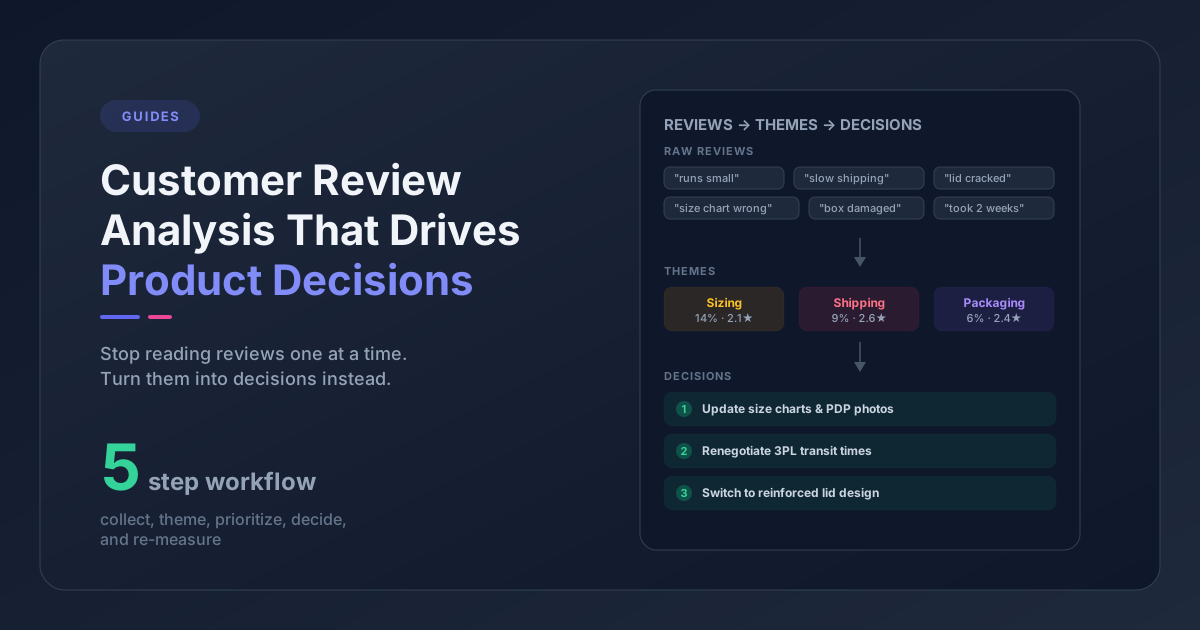
Theme analysis on your reviews and tickets is what closes that gap. It turns score changes into a specific list of problems. Specifically:
- When NPS drops, theme analysis on the low-NPS verbatims tells you which themes drove the change (sizing complaints? shipping delays? product quality?).
- When CSAT drops on a segment, theme analysis on the low-CSAT tickets tells you what went wrong in those interactions.
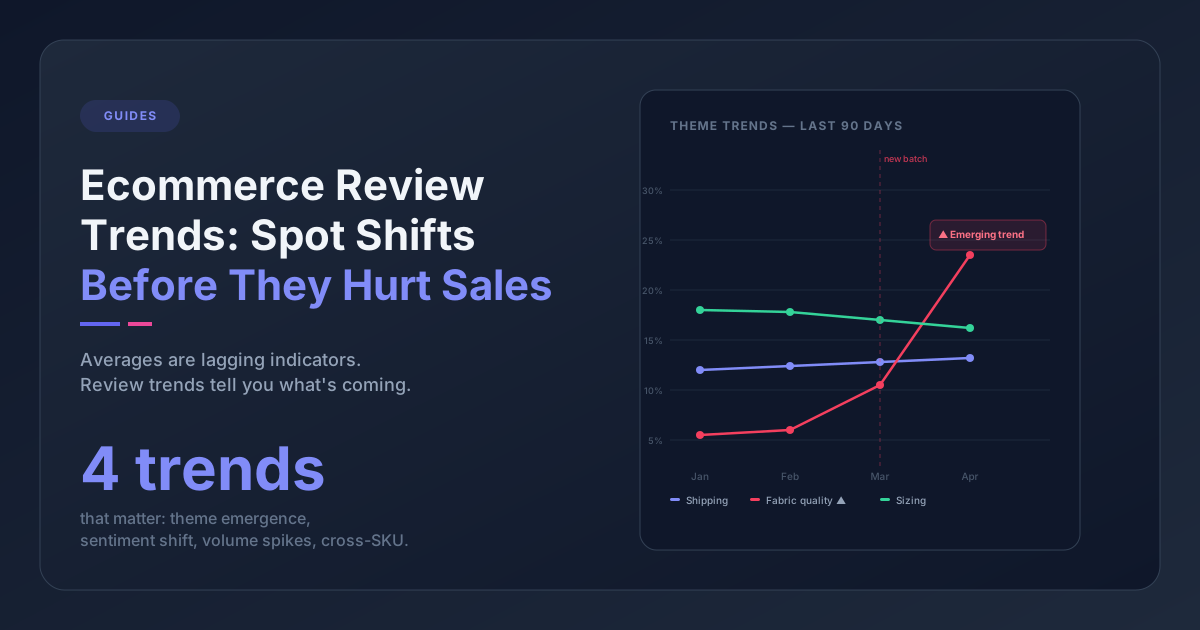
- When you want to pre-empt churn, theme analysis on reviews catches the signal weeks before NPS reflects it. Our post on spotting churn signals in reviews and tickets covers the specific language patterns to watch for.
Pattern Owl pulls your reviews and support tickets into one place, groups them by theme across your whole catalog, and shows CSAT and sentiment moving per theme. When NPS drops, you can see which themes grew. When CSAT on one product lags, you can see the exact complaints driving it.
Whatever tool you use, the principle holds: a score on its own is a number. A score with the themes behind it is a decision you can make.
A Practical Measurement Stack for Ecommerce
Here's what a complete ecommerce feedback measurement setup looks like, in priority order:
- Reviews (continuous). Already collected on your PDP. Free-form verbatim from actual buyers. This is your foundation.
- Support tickets (continuous). Already collected in Gorgias, Zendesk, eDesk. Free-form text from customers in problem moments.
- Theme analysis over #1 and #2 (weekly). The diagnostic layer that tells you what's driving everything else.
- CSAT on tickets (always-on). One-click rating on ticket close. Your CX team lives here.
- Post-order CSAT (optional). Short 1-5 rating after delivery confirmation.
- NPS (quarterly). Relationship-level brand signal with a "tell us why" text field. Segment by cohort.
- CES (task-specific). Optional, for workflows you're actively optimizing (returns, checkout).
If you can only do three, pick: reviews + tickets + theme analysis. That alone beats 90% of ecommerce feedback programs that rely on NPS or CSAT in isolation.
Our broader post on ecommerce customer satisfaction metrics covers the full metric landscape including derived metrics you can pull from reviews and tickets without running a survey at all.
Common Mistakes to Avoid
The most common ways ecommerce teams break their own NPS and CSAT programs:
- Measuring NPS quarterly but acting on it weekly. The signal is too noisy on short timeframes. Watch it quarterly; act on the underlying themes continuously.
- Treating NPS as a marketing number. Promoted NPS scores in press releases don't help anyone. NPS is an operational metric for the team running the experience.
- Running CSAT only on closed tickets. You miss the customers who never opened one (because they churned silently) and the customers who had issues resolved through self-service (who never rated).
- Ignoring segment differences. A blended NPS across all customers hides the new-customer-cohort problem. A blended CSAT across channels hides the one carrier dragging the score.
- Confusing survey response rates with satisfaction. Low response rates often mean you're over-surveying, not that customers hate you. Rotate surveys by segment to avoid fatigue.
- Ignoring the verbatim text. The score is a summary. The text is the answer. Any team that collects NPS or CSAT but doesn't systematically analyze the open-response field is leaving most of the value on the table.
- Benchmarking too much. Your NPS of 42 being "good" or "bad" relative to the industry matters less than whether it's trending up or down for your store. Trend beats benchmark.
Frequently Asked Questions
What's the difference between NPS and CSAT for ecommerce?
NPS measures relationship-level loyalty with a single 0-10 recommendation question, usually sent quarterly. CSAT measures transactional satisfaction with a 1-5 question tied to a specific interaction (order, ticket, return). NPS tells you if customers are loyal to your brand; CSAT tells you if a given interaction landed well.
When should I use CSAT vs NPS for my ecommerce store?
Start with CSAT on support tickets if your CX team is active. It's easier to set up (one-click rating on ticket close), gives daily feedback, and is immediately actionable. Add NPS quarterly once you have a baseline feedback program running.
Is NPS still relevant in 2026?
Yes, when used correctly. The research linking NPS to retention is noisier than evangelists suggest, but NPS is still the most benchmarkable single number for brand-level sentiment. The mistakes are treating it as a marketing metric or measuring it too frequently.
What's a good NPS for ecommerce?
Ecommerce NPS benchmarks vary by category. DTC apparel and beauty brands often report NPS in the 40-60 range; subscription services cluster higher (50-70); marketplaces and resellers tend to be lower (20-40). Trend direction matters more than absolute benchmark.
Can I replace NPS and CSAT with review and ticket analysis?
Not entirely, but you can cover most of the ground. Reviews and tickets give you continuous free-text feedback that surfaces themes faster than quarterly surveys. Still, NPS adds a benchmarkable relationship number and CSAT adds per-interaction accountability that text analysis alone doesn't replace.
Takeaway
NPS vs CSAT isn't really a choice for most ecommerce stores. It's a question of which one you set up first and how you layer them.
Run CSAT continuously on interactions your team owns (tickets, orders). Run NPS quarterly for the relationship pulse. Add theme analysis over your reviews and tickets as the diagnostic layer that turns score changes into decisions. That combination tells you if satisfaction is changing (NPS), where it's happening (CSAT), and why (themes).
Pick one metric in isolation and you'll always be missing at least one of those three. A score without context is a dashboard widget. A score with the themes behind it is a to-do list.