Your helpdesk is burning. Ticket volume keeps climbing, your team is drowning in "where is my order" messages, and someone on the exec team just asked why CX costs are up 30% year over year. The obvious answer is "deflect more tickets." The less obvious question is: deflect which ones?
If your goal is to reduce support tickets in ecommerce without wrecking CSAT, the work starts with ticket-theme data, not deflection tactics. Industry benchmarks suggest WISMO ("where is my order") alone accounts for 30-40% of ecommerce ticket volume for stores without strong post-purchase communication, and most of that is deflectable. The rest of your top themes probably aren't.
Every article you read about how to reduce support tickets in ecommerce recommends the same five things. Add a chatbot. Build a better FAQ. Set up self-service returns. Send proactive shipping updates. Use AI.
Those are fine ideas. They are not a strategy. A strategy starts with knowing what your tickets are actually about, which ones hurt your customers most when they go unanswered, and which ones have a cheap fix you can ship this month. Without that groundwork, you will spend three months building a chatbot that deflects 8% of tickets, miss the one product defect that's generating half your negative reviews, and tank your CSAT in the process.
Here's how to do it properly.
Why Generic Deflection Advice Backfires
Most deflection advice assumes your ticket mix looks like everyone else's. It doesn't.
A beauty brand shipping subscription boxes has a completely different ticket profile than a DTC furniture store. The beauty brand probably spends 40% of its ticket budget on billing, skip-a-month, and product swaps. The furniture store spends it on delivery scheduling, freight damage, and assembly questions. If you apply a generic "reduce WISMO" playbook to the furniture store, you'll shave 2-3% off ticket volume and leave the real cost drivers untouched. If you apply it to a brand whose top ticket driver is a specific SKU shipping with a broken clasp, you'll waste a quarter building infrastructure for a problem you don't have.
The second problem: not every ticket is a good deflection target. A "where is my order" ticket from a first-time customer is a relationship moment. Deflecting it to a self-service page instead of a human reply feels efficient on your operations dashboard and feels terrible to the person waiting for their $200 order. Research from McKinsey on CX economics shows that service interactions are the fastest way to shift a customer from neutral to promoter or detractor. You don't want to deflect the ones where a good answer would have created loyalty.
The fix for support ticket deflection in ecommerce is to deflect from data, not from a template. A feedback intelligence platform gives you the ranked ticket-theme data the rest of this playbook depends on.
Audit Your Last 90 Days of Tickets Before You Do Anything
Before you pick tactics, you need three numbers for every major theme in your ticket queue:
- Volume (how many tickets per week or per 1,000 orders)
- CSAT impact (average satisfaction score of tickets in that theme)
- Repeat rate (how often the same customer opens a second ticket in the same theme)
Export 90 days of tickets from your helpdesk. If you're on Gorgias, Zendesk, or eDesk, the data is a CSV away. You want the subject line, the first customer message, the CSAT score (if rated), the tags, and the resolution time.
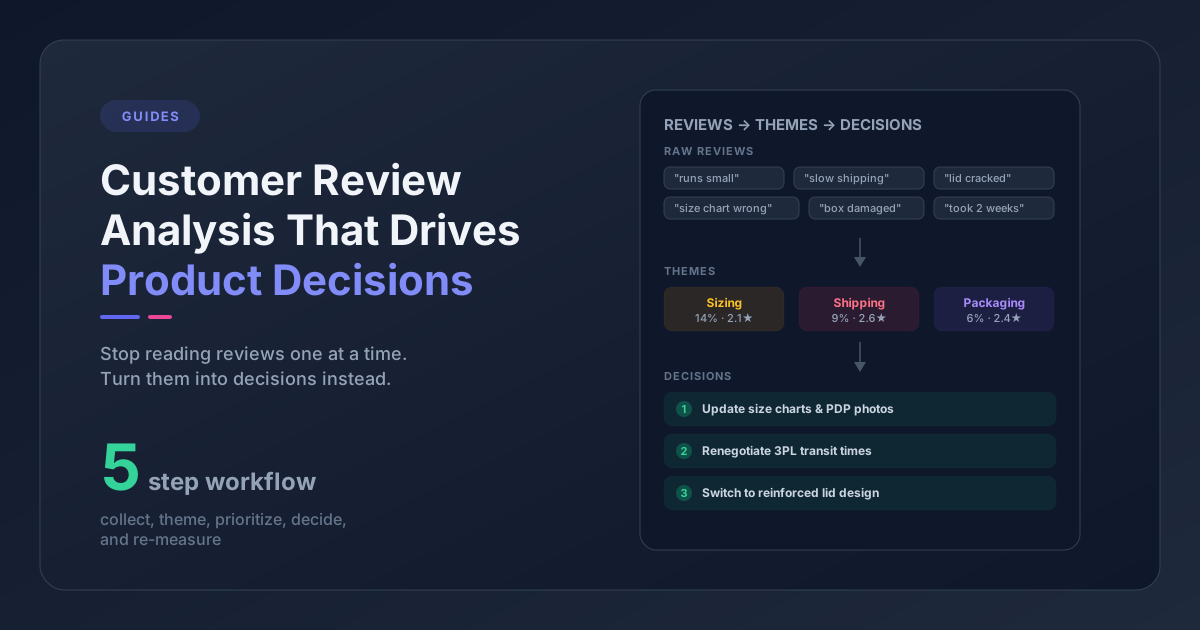
Then cluster them by theme. Manual tagging works for a quick audit. For an ongoing system, you want this automated, because the patterns shift. New products launch. Shipping carriers change. Suddenly 15% of your tickets are about a freight partner you started using six weeks ago, and your old categories don't cover it.
Tools like Pattern Owl do this step for you: point it at your helpdesk, and you get back a ranked list of ticket themes with volume and CSAT on each one, refreshed weekly. Same output you'd build in a spreadsheet, without the re-tagging every time a new product or carrier shifts the mix. Whatever tool you use, the output you need is the same: a ranked list of themes, with volume and CSAT for each.
Once you have that list, most teams are surprised by what they find. The ticket themes you thought were 10% of your volume are actually 3%. The ones you barely noticed are 20%.
The Ticket Themes That Drive Most Ecommerce Ticket Volume
Ticket mixes vary, but a handful of themes show up in almost every store's top 10. Here's what those themes are and what the honest deflection story looks like for each.
WISMO Ticket Reduction (Where Is My Order)
WISMO ("where is my order") tickets are customer inquiries about shipment status between order confirmation and delivery, typically 30-40% of ecommerce ticket volume. Most helpdesk vendor reports and shipping-platform studies put it in that range for stores without strong post-purchase communication.
It's also the most deflectable. A clear order tracking page, proactive shipping notifications (shipped, out for delivery, delivered), and an exception flow for late packages can cut WISMO volume by half in a good implementation. The key word is "proactive." If you send a shipping email before the customer thinks to ask, they don't open a ticket.
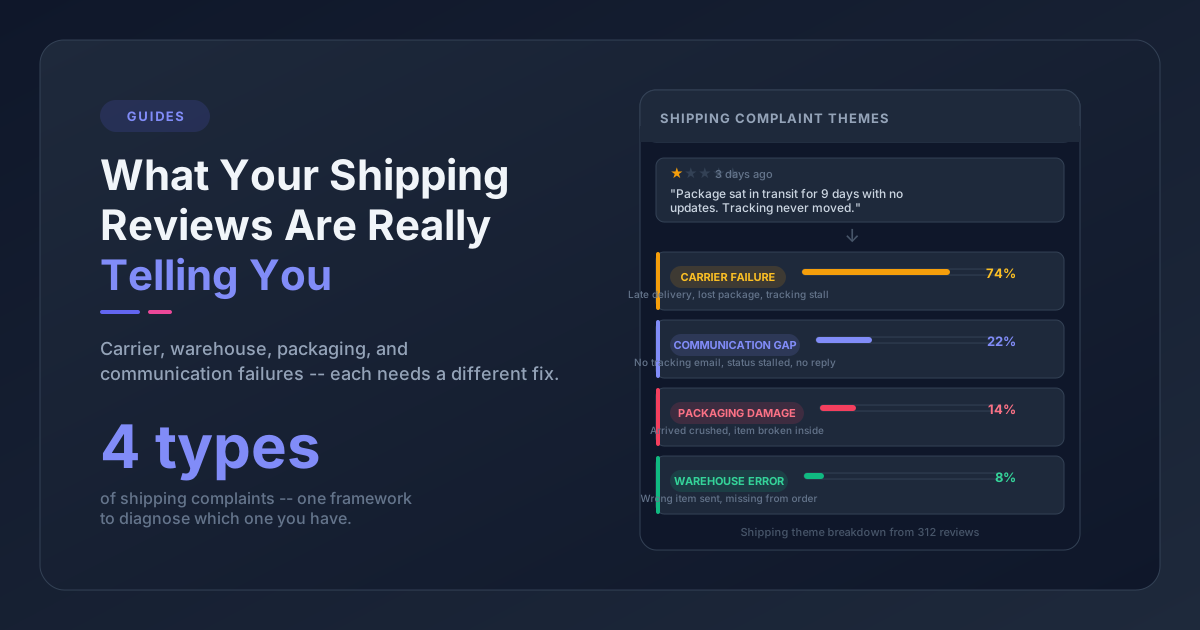
The trap: your WISMO volume might not be a communication problem. It might be a fulfillment problem. If your carrier is late 15% of the time, no amount of tracking UI fixes the underlying complaint. Check your on-time delivery rate before you build.
Returns and Refunds
Second most common theme. Most of these tickets are answerable by a self-service returns portal with a clear policy. Apps like Loop or Happy Returns exist because this deflection is well-understood and well-paid-for.
The harder piece: returns tickets are often a signal that the product itself or the product page is misleading customers. If you're getting 40 sizing complaints on one SKU, the fix is on the product page, not the helpdesk.
Sizing, Fit, and Compatibility
Apparel stores see sizing. Tech stores see compatibility ("will this case fit my iPhone 17 Pro Max?"). Both deflect well through:
- Detailed product descriptions with specs
- Size guides based on actual customer body data, not manufacturer charts
- Fit finder quizzes on the product page
- Compatibility pickers for tech accessories
The data that drives these tools should come from your actual reviews. If 200 customers mention in reviews that "runs small" is true for a jacket, that's your size guide. Not what your vendor tells you.
Product Defects and Quality Complaints
This is the category where deflection stops working. If customers are opening tickets because the product broke, a chatbot is not the answer. You're looking at a product or supplier fix, sometimes a recall.
The good news: these tickets are usually a minority. The bad news: they're high-stakes and correlate with refund rates, churn, and negative reviews. Treat product defect tickets as a signal to pull up the reviews for that SKU and see if the pattern is widespread. If it is, the helpdesk budget question is the wrong question. The product question is the right one.
Billing, Subscriptions, and Discounts
Subscription brands spend an outsized share of their ticket volume here. Common asks: pause, skip, update payment, apply a discount code, cancel. Almost all of these are self-service candidates.
The reason they end up as tickets is usually friction in the customer portal. Pause is hidden three clicks deep. Cancel requires emailing support on purpose. Fixing those UX problems deflects tickets faster than any AI.
How to Pick Which Tickets to Deflect First
Once you have your theme list with volume and CSAT, prioritize using this rough matrix:
| Volume | Deflection difficulty | CSAT risk | Priority |
|---|---|---|---|
| High | Low | Low | Do this first |
| High | Low | High | Deflect carefully, keep a human option |
| High | High | Low | Slower build, still worth it |
| High | High | High | Usually a product fix, not a deflection fix |
| Low | Low | Low | Nice to have |
| Low | High | Any | Skip |
A few principles fall out of the matrix:
Deflect the high-volume, low-CSAT-risk stuff first. WISMO with a good tracking page is the textbook example. Customers don't want to email you about their shipment. They want to know where it is. Give them the answer faster than an agent could.
Protect the high-CSAT-risk stuff. A customer asking about a refund after a bad experience is not someone to send to a bot. If your CSAT on returns tickets is already low, automating the first reply makes it lower.
Treat high-volume, high-difficulty patterns as product problems. If your top ticket theme is "my order arrived broken," the deflection framing is wrong. You need a packaging or supplier fix. Our post on root cause analysis for customer complaints shows the exact steps: pull the SKU-level review data, separate product issues from packaging issues, and build the case for a supplier or ops fix.
Deflection Tactics That Actually Work, By Theme
Here's what actually drops volume for each of the top themes, in rough order of ROI.
For WISMO
- Send proactive shipping emails at every status change. Shipped, out for delivery, delivered. These alone cut WISMO significantly.
- Link a branded tracking page in every transactional email. Don't send customers to the raw carrier page.
- Build an exception flow. When a package is late or stuck, send a status update before the customer has to chase it. This is the single biggest CSAT save.
- Put ETA on the order confirmation. Not a range. A date.
For Returns
- Publish your policy on the PDP, not buried in a footer link. Friction before purchase beats friction after.
- Use a self-serve returns portal. Loop, ReturnGO, Happy Returns, or whatever fits your stack.
- Surface fit and sizing data from reviews on the product page. Reduces the returns you'd otherwise get.
For Sizing and Fit
- Add "runs small," "runs large," "true to size" review tags and show them as a summary on the product page.
- Fit finder quizzes work especially well for first-time customers.
- Compatibility pickers are table stakes for tech accessories.
For Product Defects
- Don't deflect. Investigate. Pull the review data for the SKU, look for a pattern, talk to the supplier.
- If it's systemic, consider a recall or a proactive outreach to recent buyers. That's cheaper than the review hit.
- Close the loop in your product roadmap. Defect tickets should feed product meetings, not disappear into a resolved queue.
For Billing and Subscriptions
- Make pause, skip, and cancel one-click in the customer portal. Yes, really cancel.
- Send a pre-billing reminder email with a link to manage the subscription. Reduces "I didn't know I'd be charged" tickets.
- Build a "why are you canceling" survey into the flow. These responses are gold for product.
Measure What Actually Moved, Not Just Ticket Count
A lot of teams declare victory when total ticket volume drops. Total volume is a misleading north star because it can drop for bad reasons (customers gave up and churned) as easily as good ones.
Use these metrics instead:
- Tickets per order (TPO) or tickets per 1,000 orders. Controls for growth and seasonality.
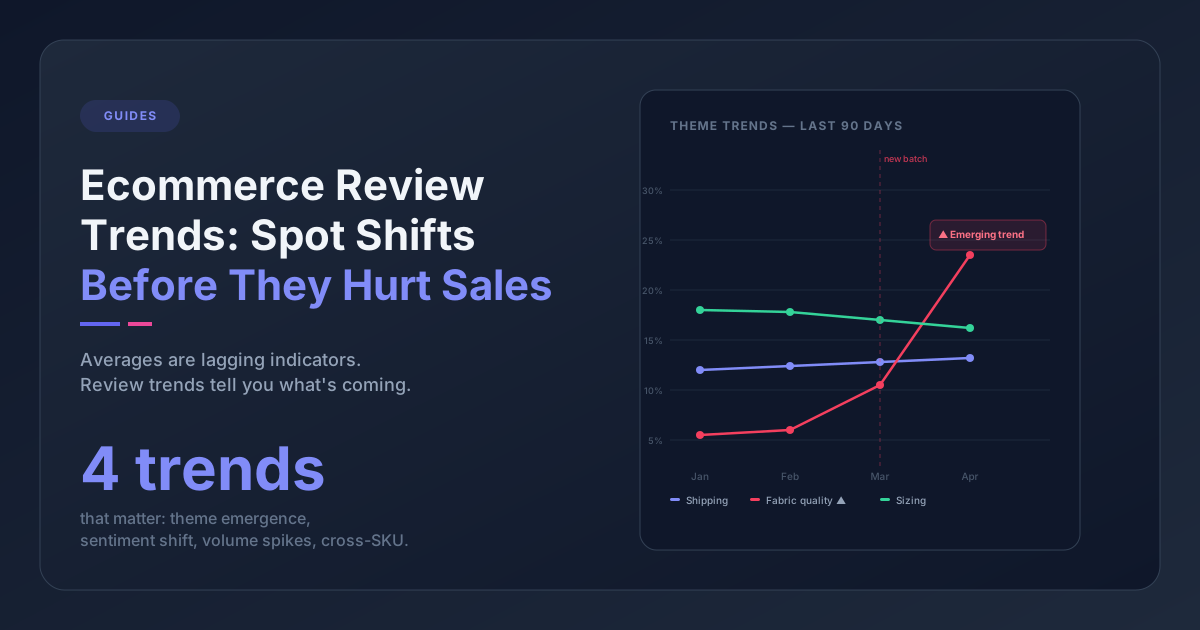
- Per-theme volume trend. Did WISMO go down, or did the mix just shift? Both matter.
- CSAT by theme. If your post-deflection CSAT on returns is lower than your pre-deflection CSAT, you deflected wrong.
- First-contact resolution on tickets that still reach humans. Higher is better.
- Refund rate, review rating, and repeat purchase rate. Guardrails against "I deflected my way into worse customer experience."
Set a target per theme ("cut WISMO tickets per 1,000 orders from 25 to 15 by end of quarter"), not a blanket "reduce total tickets by 20%."
When to Stop Deflecting and Start Fixing the Product
At some point in the process, you will find a theme that doesn't want to be deflected. Volume keeps climbing. CSAT is bad. No amount of FAQ content or chatbot training helps.
That's a signal. Your helpdesk is surfacing a product or operations problem that needs to be fixed upstream.
The classic example: you ship a new product. Two weeks in, you start seeing sizing complaints. Support tags them, the team responds politely, the tickets close. If nobody looks at the pattern, you'll keep shipping the product with the same issue and absorb months of one-star reviews and returns.
If you've built the audit habit we described at the start, this is easy to catch. Every week, you look at the top 10 themes by volume. You spot new entries fast. You pull reviews for the affected product. You tell the merchandising or product team. They fix it.
This is why the ticket-reduction conversation should never be isolated from the product conversation. Our post on analyzing support tickets for product insights covers the weekly ritual: which themes to flag to product, how to write the handoff, and what to do when the product team pushes back.
Frequently Asked Questions
What percentage of ecommerce support tickets are WISMO?
WISMO tickets typically account for 30-40% of ticket volume in ecommerce stores without strong proactive shipping communication.
How much can proactive shipping emails reduce WISMO tickets?
A well-implemented proactive shipping flow (shipped, out for delivery, delivered, plus exception alerts for late packages) can cut WISMO ticket volume by roughly half.
Should every support ticket be deflected?
No. High-CSAT-risk tickets like refund requests from upset customers deserve a human first response. Deflecting them to a bot damages retention and often costs more in lifetime value than the ticket would have cost in agent time.
What metric replaces total ticket count for measuring deflection success?
Tickets per 1,000 orders (TPO), per-theme volume trend, and CSAT-by-theme are more reliable than total ticket count, which can drop for bad reasons like customer churn.
What to Do This Week
If your goal is to genuinely reduce support tickets in ecommerce without wrecking your CSAT, here's the one-week starter:
- Export your last 90 days of tickets from your helpdesk.
- Cluster them into themes (manually or with a tool). Rank by volume and CSAT.
- Pick one high-volume, low-CSAT-risk theme to attack first. WISMO is almost always the right starting point.
- Ship the deflection infrastructure for that theme (proactive emails, a better tracking page, whatever fits).
- Set your measurement baseline. TPO, per-theme volume, CSAT.
- Review weekly. Did the theme drop? Did CSAT hold? Did anything new appear in the top 10?
- Repeat with the next theme.
Don't try to deflect everything at once. The stores that do this well move theme by theme, measure honestly, and stop when they hit the point where the remaining tickets are worth a human reply. That point exists, and it's not zero.
Ticket reduction is not the goal. Better unit economics and better customers are the goals. Ticket count is a proxy, and like most proxies, it lies if you don't watch the guardrails.