Your reviews already explain your returns: customers tell you in plain language why products came back, and systematically extracting those reasons - sizing, quality, expectation mismatches - is how you stop the pattern instead of just counting it.
If you want to use review data to reduce ecommerce returns, start with this: your reviews already contain the reasons customers send products back. You just aren't reading them that way yet.
Your returns portal says "didn't fit" or "not as expected." Your reviews say "runs two sizes small in the shoulders," "the blue looks green in person," and "material feels nothing like the product photo suggests." One of those datasets helps you fix the problem. The other just counts it.
With US retail returns hitting $849.9 billion in 2025 and the average ecommerce return rate sitting above 20%, the gap between knowing that customers return products and knowing why they return them is expensive. Processing a single return costs between $10 and $65 when you factor in shipping, inspection, restocking, and lost margin.
This guide shows you how to systematically extract return drivers from your review data and turn them into product and content changes that actually bring your return rate down.
Why Review Text Is Your Best Return-Reduction Data
Most return-reduction advice focuses on the usual suspects: better product photos, detailed size charts, stricter return windows. Those help. But they're generic fixes applied without knowing which specific problems are driving returns for which specific products.
Your review text fills that gap in three ways.
Reviews explain the "why" behind returns. Return reason codes are broad categories. Reviews are detailed narratives. When 30 customers write that a jacket "runs tight through the chest," that's a different problem than "runs long in the sleeves" - even though both get filed under "sizing issue" in your return system.
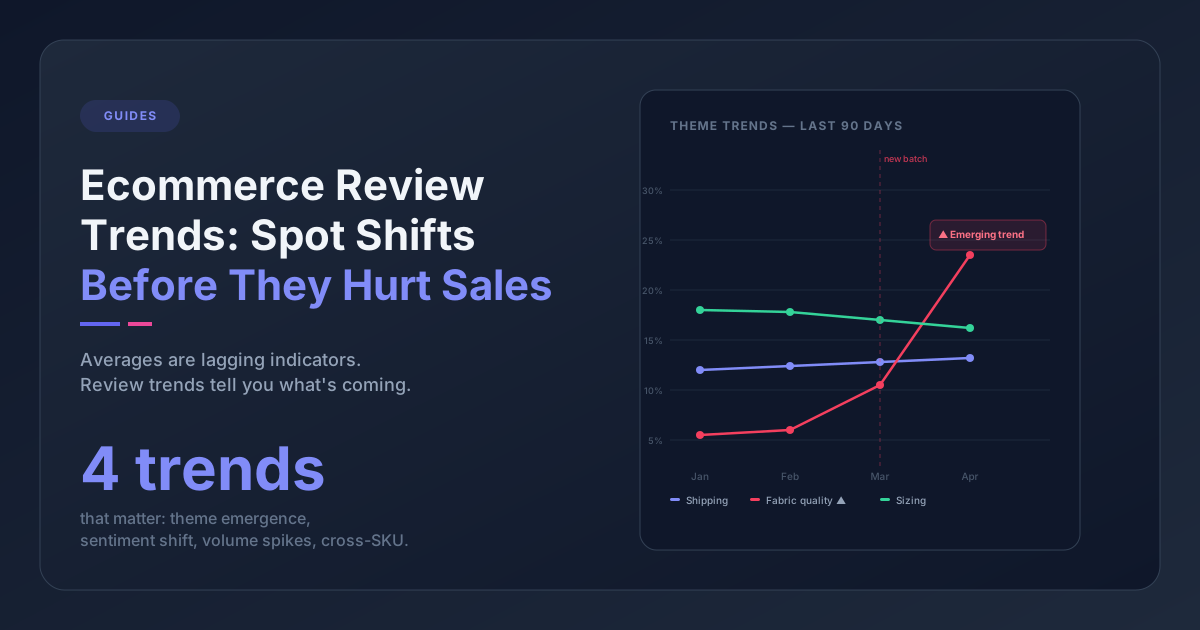
Reviews surface problems faster than return data. A customer who's unhappy with a product but keeps it still leaves a review. That means you can spot emerging issues in review text weeks before they show up as a return rate spike - especially for new product launches where early reviews are your first signal.
Reviews plus support tickets give the full picture. Returns data only captures one outcome. But customers who contact support about sizing confusion, customers who leave 3-star reviews mentioning fit issues, and customers who actually return the product are all telling you the same thing through different channels. The patterns become much clearer when you analyze reviews and support tickets together rather than channel by channel.
How to Use Review Data to Identify Return Drivers
Mining reviews for return-related insights isn't about reading every review one by one. It's about building a repeatable process that surfaces the patterns that matter most.
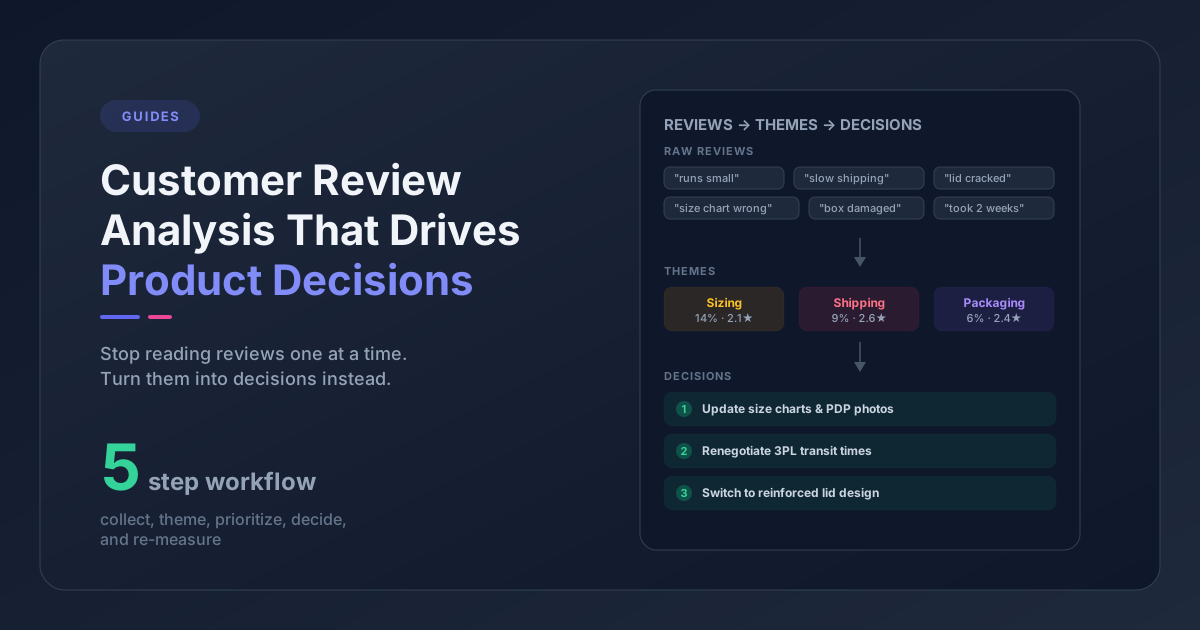
Step 1: Identify Sizing Complaints and Expectation Language
Start by looking for the specific phrases customers use when a product didn't match their expectations. These tend to cluster into a few categories:
- Sizing language: "runs small," "runs large," "order a size up," "fits tight in the [body part]," "vanity sized"
- Material and quality language: "thinner than expected," "feels cheap," "not the same quality as the photo," "fabric pills after one wash"
- Color and appearance language: "looks different in person," "color is off," "more [color] than [color]," "doesn't match the listing"
- Expectation mismatch language: "not what I expected," "misleading description," "looked bigger online," "thought it would be [X]"
The exact phrases vary by what you sell, but the pattern is consistent: customers describe the gap between what they expected and what they received. Those descriptions are your return drivers.
Step 2: Group Complaints by Product
Not all products contribute equally to your return rate. Once you've identified the complaint language, map it to specific products or product categories.
You might find that:
- Three of your 200 SKUs generate 40% of your sizing complaints
- A specific product line has a recurring "material quality" theme that others don't
- New products from a particular supplier consistently trigger "not as described" language
This product-level view is critical. A store-wide "improve your size chart" initiative is less effective than analyzing sizing complaints in your reviews for the five products that generate the most fit-related returns.
Step 3: Separate Fixable Problems From Expectation Problems
Not every return driver requires the same response. Categorizing what you find helps you route insights to the right team:
| Problem Type | Example | Fix |
|---|---|---|
| Product defect | "Zipper broke after two uses" | Quality team, supplier conversation |
| Misleading description | "Says 'oversized fit' but it's standard" | Update product copy and photos |
| Missing information | "Wish I'd known it was see-through" | Add detail to description, customer photos |
| Subjective mismatch | "Just not my style" | Harder to address - better filtering/recommendations |
The first three categories are where review mining pays off most. They're fixable, and the fix directly reduces returns. The fourth category is useful context but requires a different approach (like better product discovery or recommendation engines).
Step 4: Prioritize by Volume and Impact
You can't fix everything at once. A simple prioritization framework:
Impact = complaint frequency x estimated return cost
If 50 reviews mention that a specific shoe "runs a full size small" and your average return processing cost is $25, that's potentially $1,250+ in return costs from a single fixable issue - not counting the lost customers who don't come back.
Focus first on high-frequency, high-cost problems where the fix is within your control. A product description update costs nothing. A supplier quality conversation is harder but has outsized impact if the product is a top seller.
What to Do With What You Find
Extracting the patterns is half the work. The other half is making sure they reach the people who can act on them.
Update product descriptions with customer language. If reviews consistently say a dress "runs two sizes small," add that to the sizing notes - in those exact words. Customers trust language that matches what other buyers experienced. This also reduces pre-purchase support tickets asking about fit.
Build sizing guidance from review data. Generic size charts based on manufacturer specs often miss how products actually fit. Reviews that mention body measurements, typical size purchases, and fit outcomes ("I'm usually a medium, ordered a large, fits perfectly") are raw material for accurate, product-specific sizing guidance.
Flag products for quality review when complaint themes spike. If "material quality" complaints suddenly increase for a product that previously had clean reviews, that's a signal worth investigating immediately - before it becomes a return rate problem.
Feed insights to product and sourcing teams with evidence. "Customers are unhappy with quality" is easy to dismiss. "47 reviews in the last 3 months mention the stitching on our bestselling bag is coming loose, here are the quotes" is not. This kind of evidence-driven feedback loop is a core part of any voice of customer program - and it makes cross-team conversations far more productive.
Tracking Whether It's Working
The goal is a measurable reduction in returns driven by specific actions. Here's what to track:
Return rate by product, before and after changes. If you updated the sizing guidance on a shoe based on review feedback, compare that shoe's return rate in the 60 days before vs. after the change. Product-level tracking is essential - store-wide averages hide too much.
Complaint theme trends over time. Are "sizing" complaints for that shoe decreasing after you added better fit guidance? If the complaints persist despite the description change, the problem might be with the product itself, not the listing.
Support ticket volume for specific products. Pre-purchase questions like "does this run true to size?" should decrease if your product pages now answer those questions proactively.
Doing this manually across hundreds of products and thousands of reviews is where it breaks down for most teams. Tools like Pattern Owl automate the theme extraction step - pulling complaint patterns from both reviews and support tickets so you can skip the spreadsheet work and go straight to the product-level insights.
What to Do This Week
You don't need to overhaul your entire feedback process to start. Here's a focused starting point:
-
Pick your top 5 most-returned products. Pull them from your returns data or your ecommerce platform's analytics.
-
Read the last 50 reviews for each one. Highlight every phrase that describes a gap between expectation and reality. Group them: sizing, quality, description accuracy, appearance.
-
Make one change per product based on what you find. Update a misleading description. Add a sizing note. Flag a quality issue to your supplier. One specific change informed by actual customer language.
That's the starting version. If five changes across five products moves your return rate even a point or two, you've validated the approach - and you can decide whether to scale it with tooling or keep doing it manually.
Either way, the data is already sitting in your reviews. The question is whether you're reading it as a return-reduction resource or just a star rating.
Frequently Asked Questions
How many reviews do you need to identify return drivers?
You don't need thousands. For most products, 30-50 reviews are enough to spot the dominant complaint themes. If a sizing issue or quality concern exists, it typically shows up in 15-20% of negative reviews within the first 50.
Can review data replace return reason codes?
Review data complements return codes, it doesn't replace them. Return codes tell you how many customers cited "didn't fit." Reviews tell you why it didn't fit - "runs two sizes small in the shoulders" is actionable in a way that "sizing issue" never will be.
What types of products benefit most from review-based return reduction?
Apparel and footwear see the largest impact because sizing and fit are subjective and hard to convey in product listings. Home goods and electronics also benefit, especially where material quality or "looks different in person" complaints are common.