You've got a repeat purchase problem. You know this because you've looked at the numbers: somewhere between 70% and 80% of your first-time buyers never place a second order. If you're trying to figure out how to improve your repeat purchase rate in ecommerce, you've probably already tried what every playbook tells you to do. You launch a loyalty program. You build a post-purchase email sequence. You offer a discount code for the next order.
And the number barely moves.
Here's why. Most repeat purchase advice treats the problem as a marketing challenge - how do you remind customers you exist and incentivize them to come back? But for a huge percentage of one-time buyers, the issue isn't that they forgot about you. It's that something about the first experience disappointed them. And no amount of points or email sequences fixes a product that ran two sizes small or a shirt that pilled after one wash.
The stores that actually move their repeat purchase rate start by understanding why customers don't come back. That means looking at what those customers actually said - in their reviews, their support tickets, and their survey responses.
What's a Good Repeat Purchase Rate?
Before diagnosing the problem, you need to know where you stand. The average ecommerce repeat purchase rate - also called the repeat customer rate - sits around 28%, but that number varies dramatically by business model:
| Business Type | Typical Repeat Rate |
|---|---|
| Consumables / Groceries | 40%+ |
| Supplements | ~29% |
| Apparel / Fashion | 20-26% |
| Home Goods | 15-22% |
| Luxury / High-End | ~10% |
If you sell consumable products and your repeat rate is below 30%, something specific is wrong. If you sell durable goods and you're above 20%, you're doing well.
The financial case for improving this number is straightforward. Increasing customer retention by just 5% can boost profits by 25-95%, according to research from Bain & Company. Repeat customers spend 67% more per order than first-time buyers. And acquiring a new customer costs 5 to 25 times more than retaining an existing one.
Even a small improvement compounds quickly. The hidden cost of ignoring this feedback compounds too - returns, churn, and wasted ad spend all trace back to the same unanalyzed data.
Why Loyalty Programs Alone Don't Fix It
The standard playbook for improving repeat purchase rate looks like this:
- Launch a points-based loyalty program
- Build a post-purchase email drip sequence
- Offer a discount on the second order
- Add a subscription option for replenishable products
These tactics work - when the underlying product experience is solid. A loyalty program gives a happy customer one more reason to come back. But it doesn't give a disappointed customer any reason at all.
If your customer ordered a jacket that runs tight in the chest, a 10% off code for their next purchase isn't solving their problem. If their support ticket about a defective product went unanswered for three days, a loyalty points balance doesn't rebuild trust.
The uncomfortable truth is that 79% of consumers say they won't buy from a brand again after a bad post-purchase experience. And only 20% of first-time online buyers ever make a second purchase.
For most stores, the biggest lever isn't marketing harder to existing customers. It's fixing the product and experience issues that drive them away after the first order.
How Customer Feedback Reveals Why People Don't Come Back
Your reviews and support tickets contain the answer to "why don't customers reorder?" You just need to read them differently.
Signal 1: Review themes that correlate with one-and-done buyers
Look at the themes that appear in reviews from customers who only ever placed one order. Compare them to themes from repeat buyers. The differences tell you exactly what's going wrong.
Common one-time-buyer themes include:
- Sizing and fit complaints - "Runs small," "had to return," "ordering a different size" - these customers experienced enough friction that they won't risk it again
- Quality vs. price mismatch - "Feels cheap for the price," "expected better materials" - the value proposition didn't deliver
- Expectation gaps - "Doesn't look like the photos," "misleading description" - trust was broken on the first interaction
When you find patterns in customer reviews, you can point to the exact products bleeding repeat buyers - and the exact complaints driving them away.
Signal 2: Support ticket patterns that predict non-return
Support tickets are even more telling than reviews because they capture problems before the customer decides whether to buy again. Pay attention to:
- Ticket themes by product - Which products generate the most support contacts per order? Those are your retention killers.
- Resolution satisfaction - Customers whose tickets were resolved quickly and generously buy again at a much higher rate than those who had to fight for a resolution.
- Repeated themes - If the same complaint keeps appearing in tickets month after month, that's a product issue you're paying for in both support costs and lost repeat purchases.
When you analyze reviews and support tickets together, you see things neither source shows alone. A product might have a 4.2-star average (looks fine!) but generate 3x the support tickets of similar products. That gap between the rating and the actual experience is where repeat purchases die.
Signal 3: Sentiment shifts over time
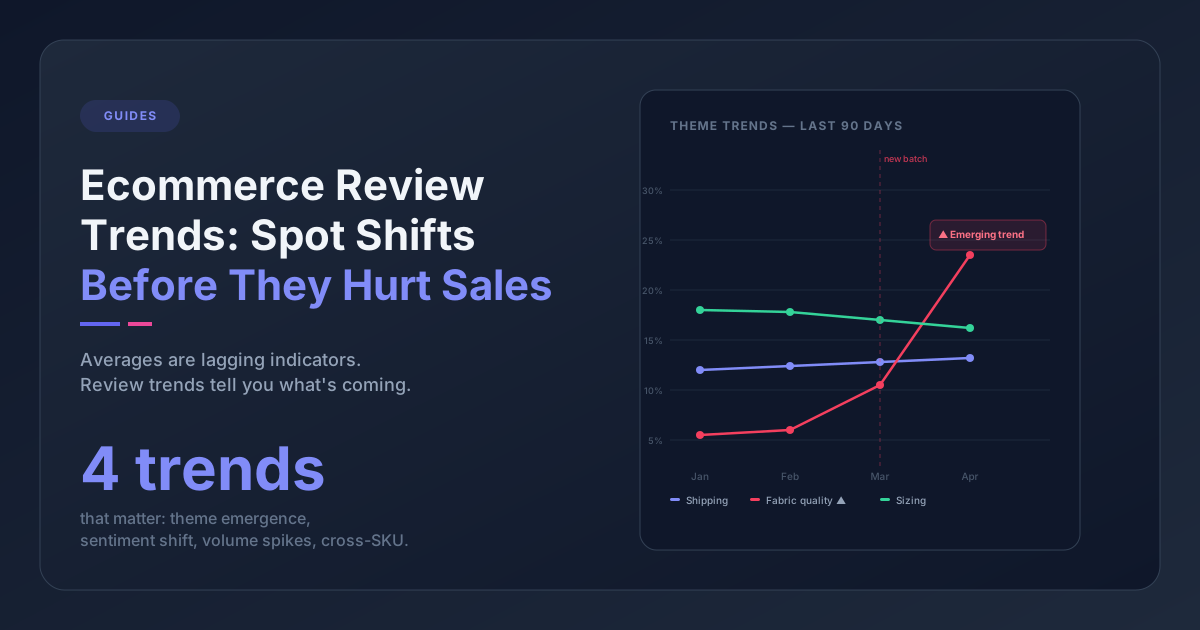
Track whether specific complaints are growing or shrinking over time. If more customers are complaining about material quality this quarter than last, that's a supply chain or manufacturing problem eating your repeat rate - even if your star ratings look the same.
Complaint trends move first. You'll see quality gripes spike months before your repeat rate dips. For a deeper look at how to spot churn signals in your reviews, we cover six specific text patterns to watch for.
How to Improve Repeat Purchase Rate with Customer Feedback
Here's a practical framework for using customer feedback to improve your repeat purchase rate.
Step 1: Identify your one-time-buyer products
Not all products contribute equally to retention. Some products naturally drive repeat purchases (consumables, basics, accessories). Others are one-and-done by nature (furniture, seasonal items). But within every catalog, there are products that should drive repeat buying but don't.
Pull your repeat purchase data by product or product category. Flag products where the repeat rate is significantly below category average. These are your investigation targets.
Step 2: Extract complaint themes for those products
For each flagged product, look at the reviews and support tickets. What are customers complaining about? Group the complaints into themes:
- Sizing and fit
- Material or build quality
- Color or appearance accuracy
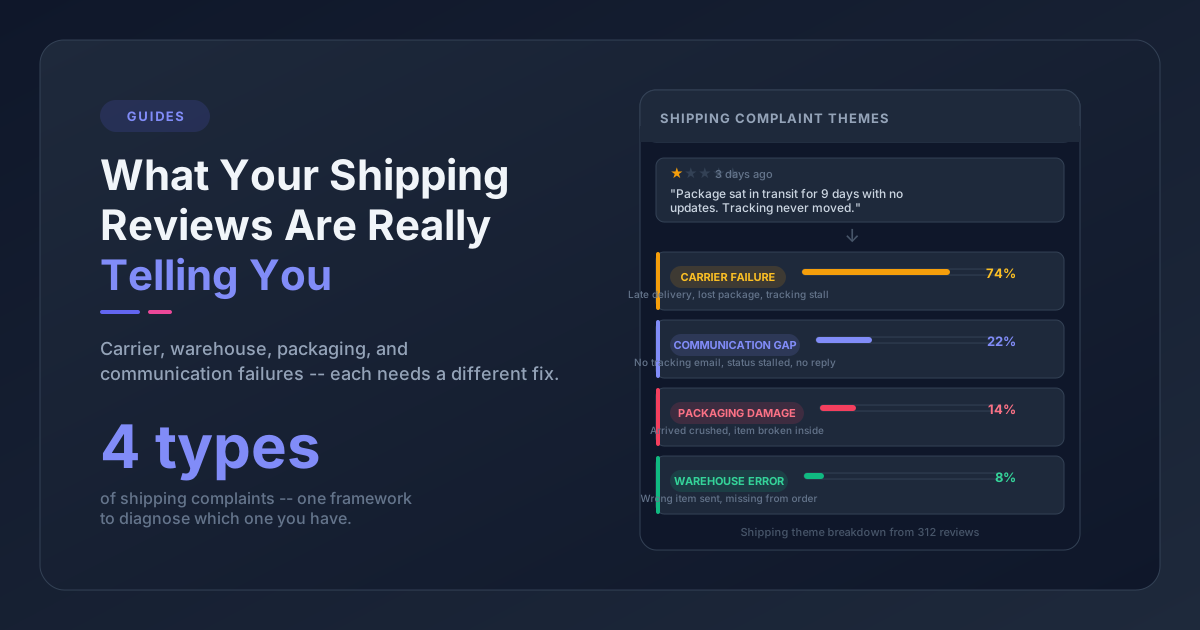
- Packaging and shipping condition
- Value for money
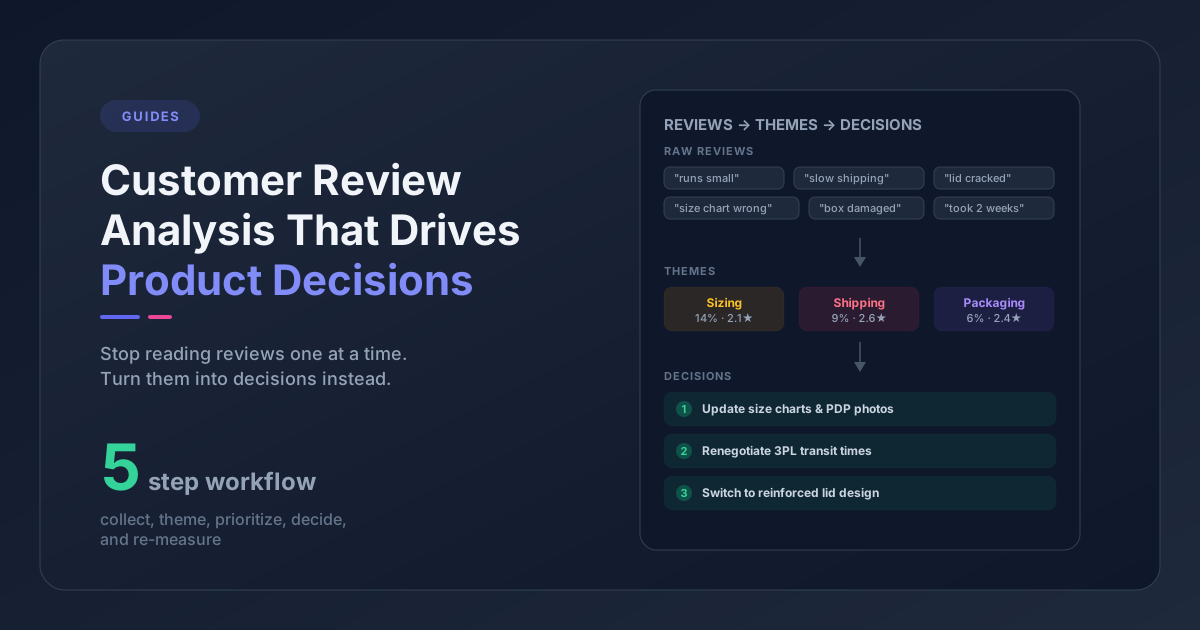
Tools that categorize customer feedback automatically make this manageable even with thousands of reviews. Pattern Owl groups complaints by product automatically - so instead of reading 400 reviews, you see "sizing runs small" appeared 47 times on your best-selling jacket.
Step 3: Fix the root causes
For each theme:
- Sizing complaints → Update size guides with specific measurements. Add fit notes from real customer language ("runs 1-2 sizes small in the shoulders"). Consider size recommendation tools.
- Quality concerns → Investigate suppliers. Compare recent production batches against earlier ones. If quality has slipped, address it at the source.
- Description mismatches → Rewrite product descriptions using the actual language customers use. If reviews say "the blue looks more like teal in person," update the color description and photos.
- Support friction → Audit response times and resolution rates for high-ticket products. Faster, more generous resolutions directly correlate with repeat purchases.
Step 4: Track improvement over time
After making changes, monitor two things in parallel:
- Feedback sentiment for the changed themes - Are sizing complaints decreasing? Is quality sentiment improving? These move first.
- Repeat purchase rate for affected products - This lags behind sentiment by weeks or months, but it will follow.
The feedback data gives you early confirmation that your changes are working before the revenue data catches up.
What Actually Moves the Needle
Four changes move the needle most:
Fixing the top 3 complaint themes per product. You don't need to address everything. The Pareto principle holds: a small number of issues drive most of the dissatisfaction. Identify them, fix them, and the repeat rate responds.
Improving product page accuracy. When customers get exactly what they expected, they come back. When they don't, they don't. Mining customer feedback to improve product pages pays off twice: fewer returns now, more repeat buyers later.
Resolving support issues faster and more generously. A customer who contacts support and gets a great resolution often becomes more loyal than one who never had a problem. The data supports this consistently - how you handle the bad moments matters more than how you celebrate the good ones.
Tracking post-purchase experience by product, not just overall. Store-level repeat rates mask product-level problems. A single problematic product with high sales volume can drag your entire repeat rate down while your averages look healthy.
Measuring Progress: How to Track Customer Retention Improvements
You need both outcome metrics and early-warning metrics:
- Repeat purchase rate by product (not just store-wide) - The number you're trying to move
- Are complaints shrinking? - After you fix sizing on a product, are "runs small" mentions actually dropping?
- Support tickets per product - Fewer tickets = less friction = more repeat buyers
- Days to second purchase - If this number is getting shorter, your fixes are working
- Are the same problems still showing up? - If you fixed the size guide and customers are still complaining, the fix didn't work
Remember: complaints change before purchase rates do. That's why fixing what customers are saying now is the fastest path to better retention numbers next quarter. For a deeper look at which customer satisfaction metrics to pair with repeat rate, and how return rate benchmarks factor in, see our companion guides.
Frequently Asked Questions
What is a good repeat purchase rate for ecommerce?
The average ecommerce repeat purchase rate is around 28%. Consumable products typically see 40%+, apparel 20-26%, and home goods 15-22%. If your rate is significantly below average for your business type, customer feedback analysis can help diagnose specific product or experience issues driving one-time buyers away.
How do you calculate repeat purchase rate?
Repeat purchase rate is the percentage of customers who place more than one order within a defined time period. Divide the number of customers with two or more orders by your total customer count, then multiply by 100. Most ecommerce platforms report this in their analytics dashboard.
Why don't loyalty programs improve repeat purchase rate?
Loyalty programs incentivize already-satisfied customers to return, but they don't address the root cause when buyers are disappointed. If a customer received a product that didn't match the description or had quality issues, points and discounts won't rebuild trust. Fixing product and experience problems identified through feedback is more effective than marketing harder to dissatisfied buyers.
What is the second purchase rate?
The second purchase rate measures the percentage of first-time buyers who come back for a second order. It's often lower than overall repeat purchase rate because it captures the critical first-to-second conversion. Only about 20% of first-time online buyers ever make a second purchase, making it the most important retention milestone.
Stop Marketing Harder, Start Fixing the Experience
If your repeat purchase rate is stuck, another email sequence won't unstick it. The answer is in the reviews and tickets you already have - specific product problems, specific complaints, fixable causes.
Start with your three worst-performing products. Pull the reviews. Find the top complaint theme for each. Fix those three things. That's your fastest path to a higher repeat rate.
See what your customers are actually saying - Pattern Owl groups complaints by product across reviews and support tickets, so you can find the fixes that bring buyers back.