Your team probably has a process for negative reviews. Someone reads them, writes a polite response, maybe flags the really bad ones. Then everyone moves on.
That's a waste of the most specific, actionable feedback your customers will ever give you. If you want to turn negative reviews into product improvements in your ecommerce store, you need to stop treating them as a customer service problem and start treating them as product intelligence.
Think about it: a 5-star review tells you "great product, love it." Useful for your ego, not much else. A 2-star review that says "the stitching came apart after three washes" or "runs two sizes smaller than the chart says" - that's a product brief written by someone who actually used the thing.
About 19% of reviews the average ecommerce business receives are negative. That's not a small number. Across a few hundred reviews, you're sitting on dozens of detailed problem reports - and 3 in 4 businesses don't even reply to them, let alone analyze what they're saying.
Why Most Brands Waste Their Negative Reviews
The standard playbook for negative reviews looks like this:
- Customer leaves a bad review
- Someone on the CX team writes a sympathetic response
- Maybe they offer a discount or replacement
- The review gets filed under "handled"
That's reputation management, not product management. The response addresses the individual customer, but nobody asks the harder question: is this complaint telling us something we should fix?
The gap is even wider when you consider that your most dissatisfied customers often don't leave reviews at all - they just don't come back. The ones who do write something are giving you information that your return reason codes and NPS scores can't match in specificity. Star ratings alone don't tell you much - the text is where the product development signal lives.
The problem isn't that brands ignore negative reviews. It's that they respond to each one individually without ever stepping back to see what the complaints look like in aggregate. One customer saying "the color looks different in person" is an opinion. Thirty customers saying it is a product listing problem. And that's before you count the hidden costs of ignoring that feedback entirely.
How to Turn Negative Reviews Into Product Improvements
The shift is simple in concept: read negative reviews not as customer complaints to resolve, but as data points to aggregate. Here's how to do it systematically.
Step 1: Separate Complaints From Noise
Not every negative review contains a product signal. Before you start categorizing, filter out what you can't act on:
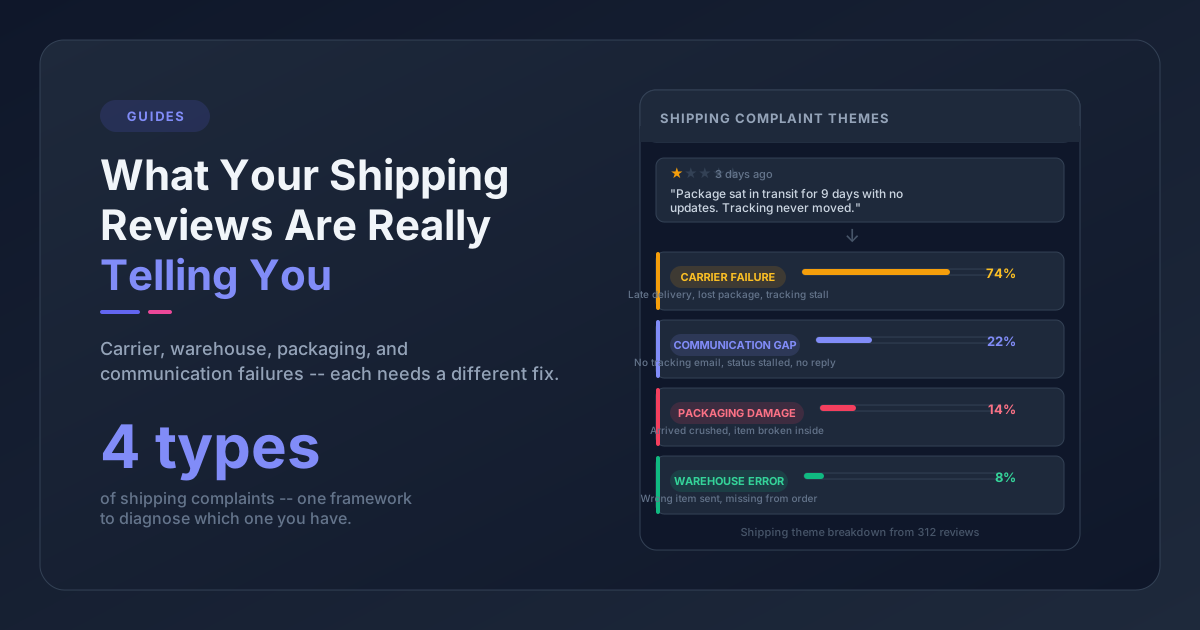
- Shipping and fulfillment issues - "Arrived late" or "box was damaged" are logistics problems, not product problems. Route these to your 3PL or ops team.
- Subjective taste - "Just didn't like the style" or "not my color" aren't fixable. These are filtering and recommendation problems.
- Bad-faith reviews - Competitor sabotage, confused customers who reviewed the wrong product, or reviews that clearly describe a different item.
- One-time incidents - A single mention of something unusual ("mine had a scratch on it") without any supporting pattern isn't actionable yet.
What you're left with is the signal: reviews that describe a repeatable product issue that could be fixed, prevented, or addressed with better information. This is where negative review analysis for ecommerce gets practical - you're not reading reviews to feel bad, you're reading them to find what to fix.
Step 2: Categorize by Problem Type
Once you've filtered down to actionable complaints, categorize what you find. Different problem types require different responses:
| Problem Type | What It Sounds Like | Who Needs to Know |
|---|---|---|
| Defect/quality | "Broke after a week," "stitching came apart," "zipper stuck" | Product team, supplier/manufacturer |
| Expectation mismatch | "Smaller than pictured," "color is way off," "not as soft as described" | Content team (product pages, photos) |
| Missing feature/info | "Wish it had pockets," "didn't know it needed batteries," "no care instructions" | Product team (future versions), content team (descriptions) |
| Sizing/fit | "Runs small," "true to size but chart is wrong," "tight in the shoulders" | Content team (size guides), product team (patterns/molds) |
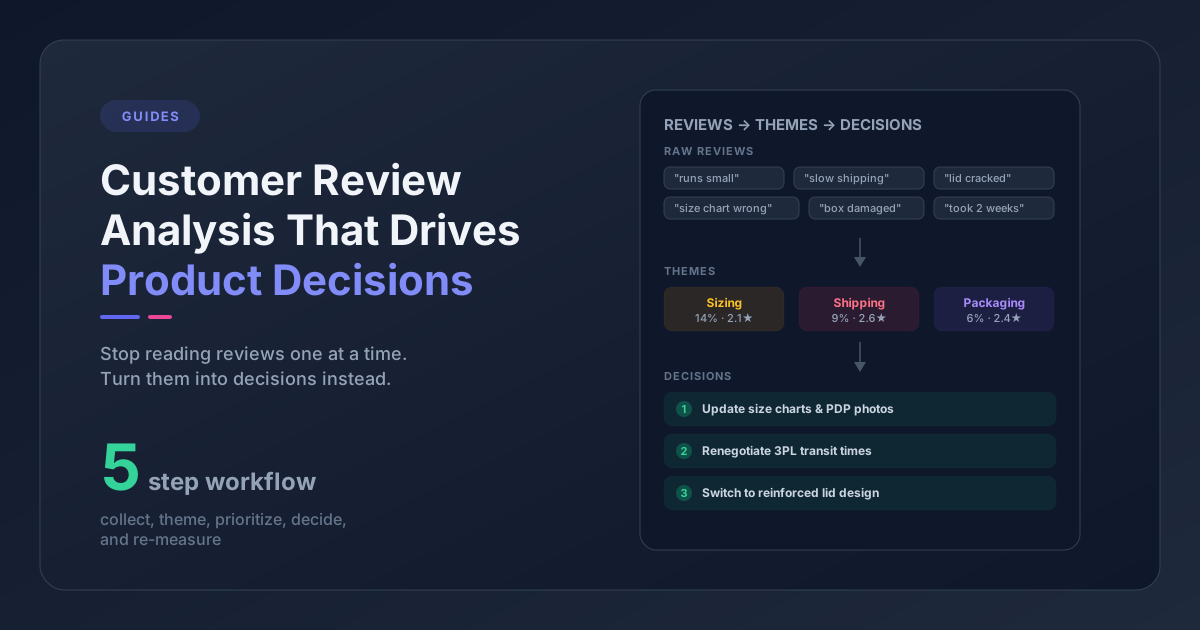
This categorization matters because it determines where the fix happens. A quality defect goes to your supplier. An expectation mismatch goes to whoever writes your product descriptions. A sizing complaint might need both a content update and a product change. Building this into a broader voice of customer program ensures the insights actually reach the right teams.
Step 3: Spot the Repeating Patterns
A single complaint is an anecdote. You're looking for patterns - the same issue mentioned independently by multiple customers across multiple reviews.
The threshold depends on your review volume, but a reasonable starting point:
- Under 50 reviews for a product: 3+ mentions of the same issue = worth investigating
- 50-200 reviews: 5+ mentions = a clear pattern
- 200+ reviews: Look at percentage - if more than 5% of reviews mention the same complaint, that's significant
The language won't be identical across reviews, but the underlying issue will be. "Runs small," "order a size up," "tight in the chest," and "sizing is off" are all the same problem described differently. Finding these patterns is where the real value is.
When you combine negative reviews with support ticket data, the patterns get even clearer. Your helpdesk is full of support tickets that point to product fixes too. Customers who contact support about a sizing issue and customers who leave a 2-star review mentioning fit are reporting the same problem through different channels.
Step 4: Build a Prioritized Improvement Queue
You can't fix everything at once. Prioritize using a simple framework:
Priority = complaint frequency x business impact
Business impact includes:
- Return cost - If this complaint correlates with returns, each instance has a dollar value
- Product importance - Complaints about your bestseller matter more than complaints about a low-volume SKU
- Fix difficulty - Updating a product description takes an hour. Changing a supplier takes months. Factor in what you can actually do quickly.
A real example: a company selling wireless keyboards discovered through negative reviews that their built-in tablet stand couldn't support heavier tablets - they kept tipping over. That single repeating pattern led to a redesign that turned the product into a bestseller.
Your queue doesn't need to be complicated. A spreadsheet with columns for product, complaint theme, frequency, estimated impact, and proposed fix is enough to start.
From Complaints to Changes
Here's what it looks like when negative review analysis leads to actual product improvements:
Sizing complaints → Updated size guides. If reviews consistently say a dress "runs two sizes small," add that specific guidance to the product page - in the customer's own words. "Customers recommend sizing up" is more credible than a generic size chart. This also reduces returns driven by fit issues.
Material quality complaints → Supplier conversations. "Thinner than expected" or "quality dropped from last order" showing up in recent reviews might mean your supplier changed something. That's a conversation you need to have with specific evidence, not a vague "customers seem unhappy."
"Not as pictured" complaints → New product photography. If multiple reviews say the color, texture, or size looks different in person, your photos are creating the wrong expectation. The fix is often simple: add photos in different lighting, include a size reference object, or reshoot entirely.
Missing information complaints → Description updates. "Didn't realize it was hand-wash only" or "wish I'd known it doesn't come with batteries" - these are one-line additions to your product description that prevent the next 50 complaints.
The common thread: each fix comes from specific language in actual reviews, not from guesswork about what customers want. This is product development from customer reviews in its most direct form.
Tracking Whether Improvements Land
Making changes based on negative reviews is only useful if you verify the changes worked. Track these after implementing a fix:
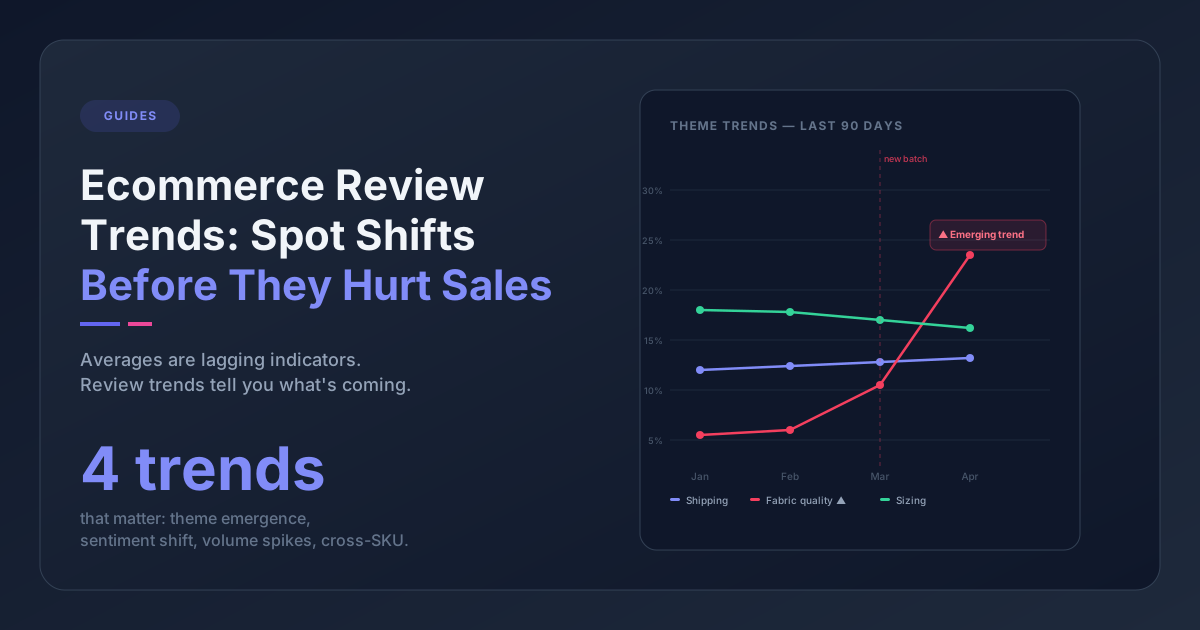
Complaint theme volume over time. If you updated the size guide for a shoe in January, are "sizing" complaints for that shoe declining in February and March? If they're not, the fix didn't address the root cause - or the product itself needs to change, not just the description.
New review sentiment for the affected product. Are recent reviews more positive than ones from before the change? This is a rough signal but directionally useful.
Return rate for the specific product. The most concrete measure. If description updates reduce sizing-related returns even slightly, you can put a dollar figure on what the negative review analysis was worth.
Doing this at scale - across dozens of products, hundreds of reviews, and multiple complaint categories - is where manual tracking falls apart. Automating your review analysis is the difference between checking once and having a system that catches every shift. Tools like Pattern Owl automate the theme extraction step, pulling complaint patterns from both reviews and support tickets so you can go straight to the prioritization and fix stages.
Start This Week
You don't need a new tool or a process overhaul to start getting value from negative reviews. Here's a focused starting point:
-
Pick your 3 lowest-rated products. Pull them from your review platform or ecommerce dashboard.
-
Read every negative review (1-3 stars) for each one. Write down each specific complaint in your own words. Group the duplicates.
-
For each product, identify the single most frequent complaint. Is it sizing? Quality? Description accuracy? Something else?
-
Make one change per product this week. Update a description, add a sizing note, flag a quality issue to your supplier, reshoot a photo.
That's four steps, three products, three changes. If even one of those changes reduces complaints or returns for that product, you've validated the approach - and you'll know exactly where to invest more effort.
The negative reviews are already written. The product intelligence is already in them. The only question is whether you're going to keep just responding to them or start using them.
Frequently Asked Questions
How many negative reviews do you need before acting on a pattern?
It depends on total review volume, but a good rule of thumb is 3-5 independent mentions of the same issue for products with under 200 reviews. For higher-volume products, look at percentages - if more than 5% of reviews mention the same complaint, that's a reliable pattern worth acting on. Don't wait for statistical perfection; if the same specific complaint keeps showing up, it's real.
Should you fix the product or fix the product listing first?
Start with the listing. Description updates, sizing guidance, and better photos can be done in hours and often resolve expectation-mismatch complaints immediately. Product-level changes (materials, design, supplier switches) take longer and cost more - pursue those for defect and quality patterns where the listing can't compensate for the actual product issue.
What if negative reviews mention problems you can't fix?
Some complaints are about inherent product characteristics ("too heavy" for a cast iron pan, "takes up too much space" for a large appliance). You can't fix these, but you can prevent them from becoming negative reviews by setting expectations upfront. Add weight, dimensions, and use-case context to descriptions so customers self-select before buying. The goal isn't zero negative reviews - it's eliminating the preventable ones.